Free Castles and Ruins in Ireland You Can Visit Without a Ticket
12 places · Updated July 2026
Ireland has over a thousand castles and tower houses, and while the headliners charge admission, dozens of remarkable ruins cost nothing at all. This page gathers 12 free castles and stone ruins spread across eight counties — from a 12th-century hilltop fortress in Laois to a cannon-blasted tower house in West Cork. Some are unstaffed National Monuments you can wander at dawn; others offer free guided tours with OPW guides who know every siege and scandal. None requires a ticket. The trade-off is practical: many have no toilets, no café, and uneven ground underfoot. Bring sturdy shoes, a rain jacket, and a sense of where the nearest town is for food. For families, several pair castle ruins with woodland walks, beaches, or playgrounds — so the outing works even when attention spans run short.
1.Rock of Dunamase
The hilltop fortress with 360° views
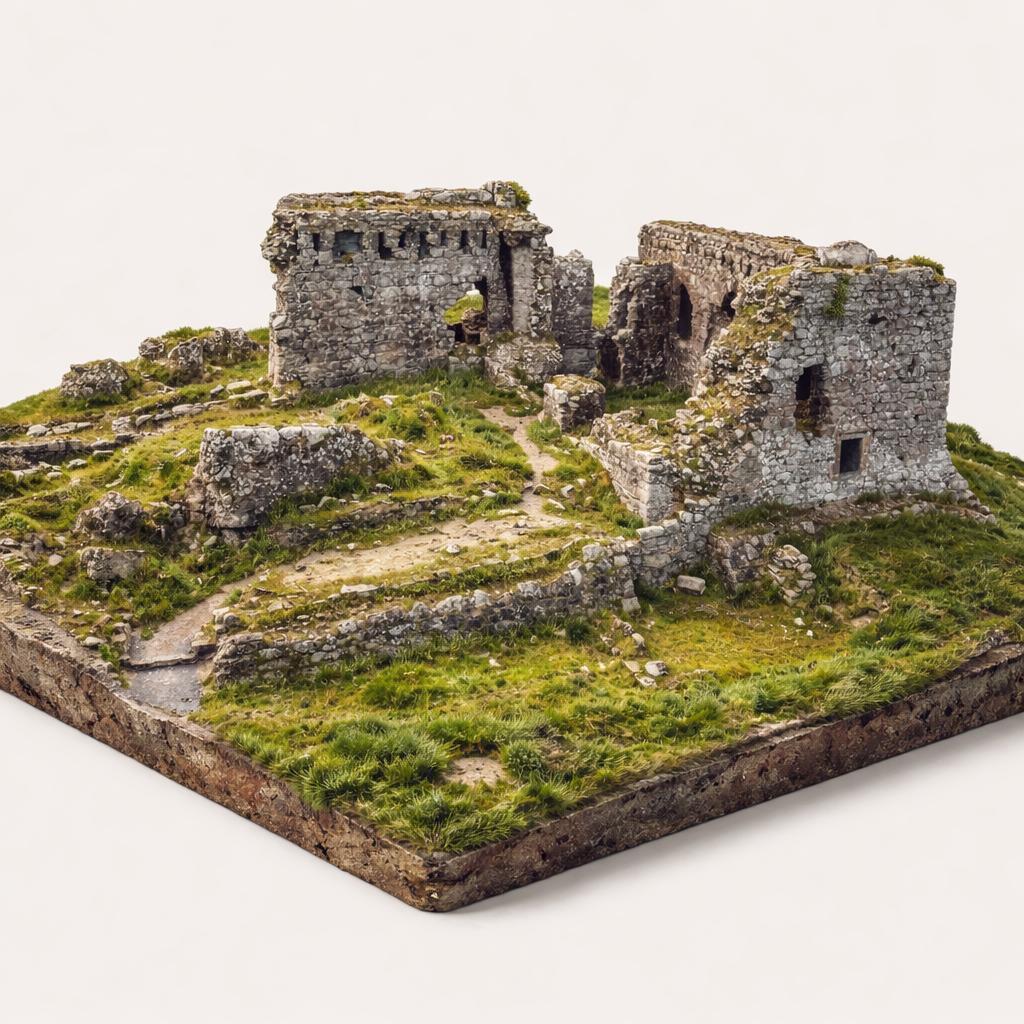
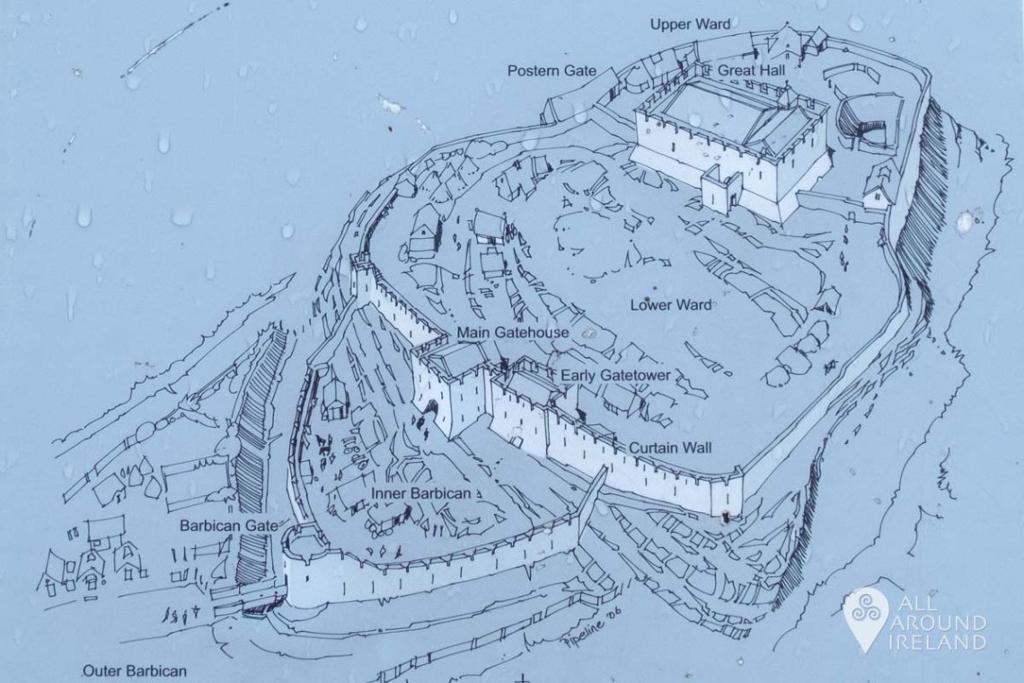
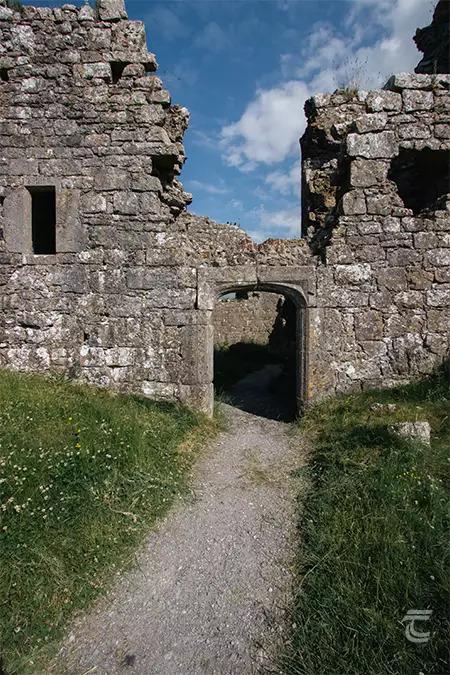
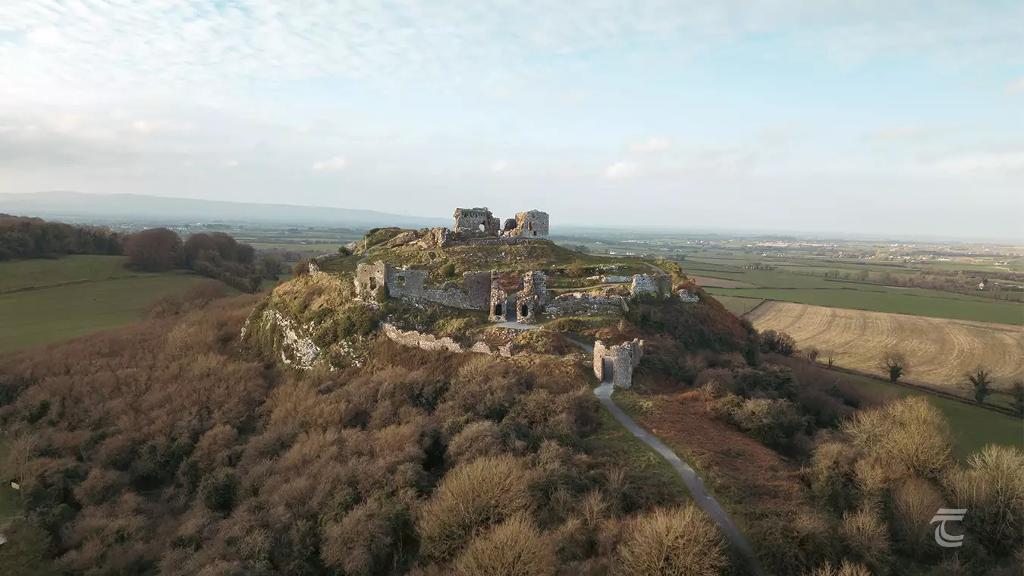
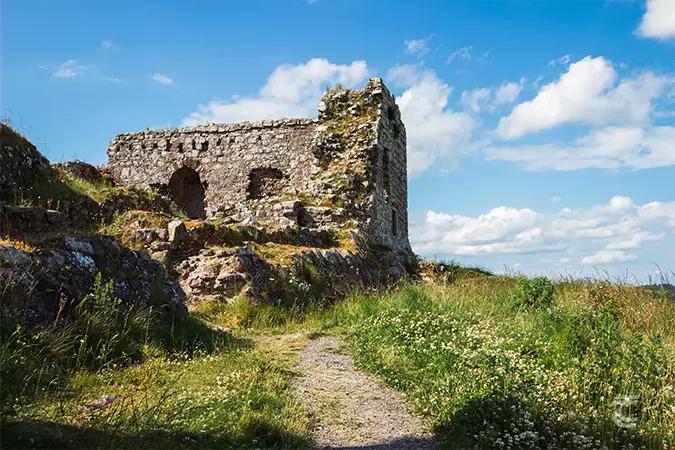
Crowning a 46-metre limestone outcrop above the Laois plains, the Rock of Dunamase is the most dramatic free castle ruin in Ireland's Ancient East. Wander through the 12th-century barbican gate — look up for the murder holes and portcullis slot — then climb past defensive ditches into the Lower Ward and up to the Great Hall on the summit. The panorama stretches to the Slieve Bloom Mountains. A free 33-minute audio guide (Spotify, Apple Podcasts) walks you through the Viking raids, Norman power, and Cromwellian destruction. Unstaffed and open dawn to dusk, every day of the year.
- Best time
- Sunrise or sunset for the best light on the ruins and the plains below
- Tip
- Download the free audio guide before you arrive — there is almost no phone signal at the Rock.
2.Doe Castle
The tidal peninsula stronghold
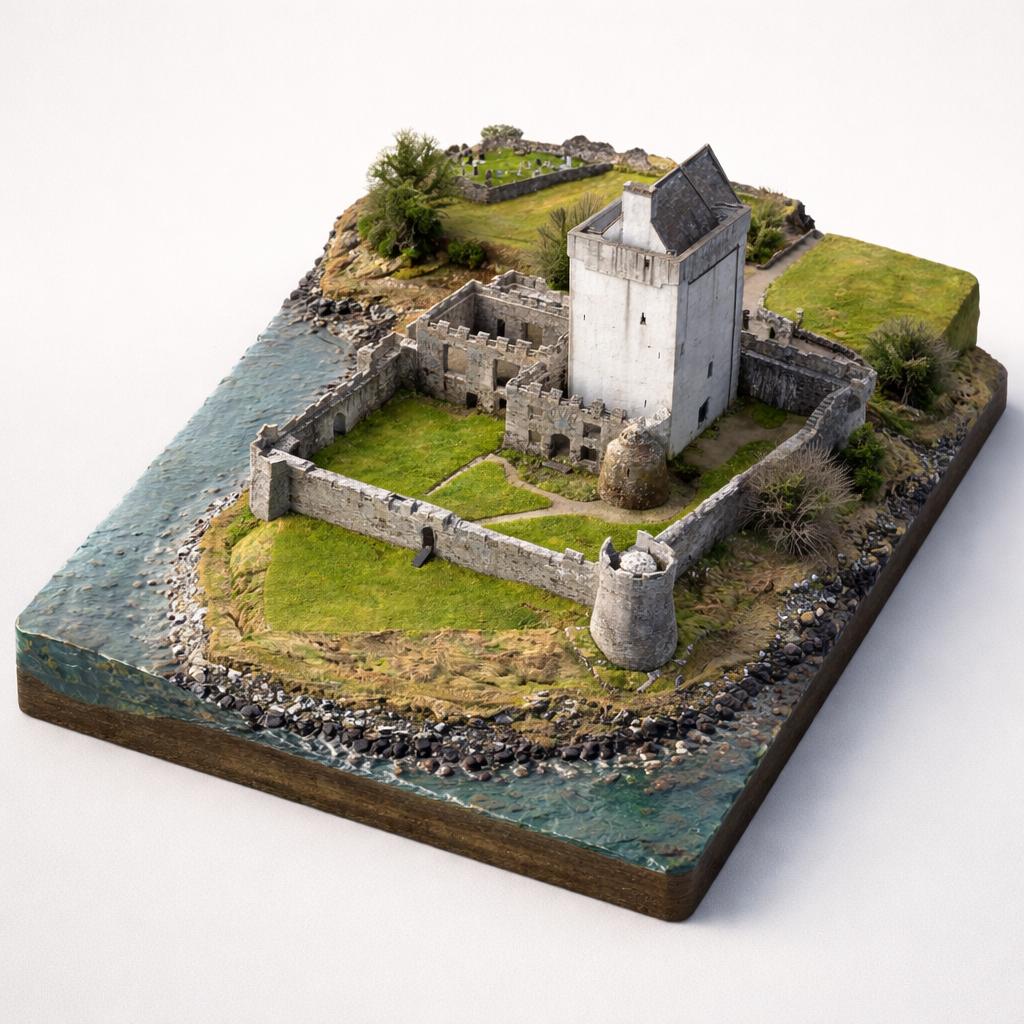
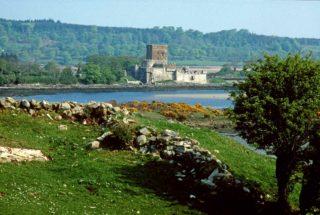
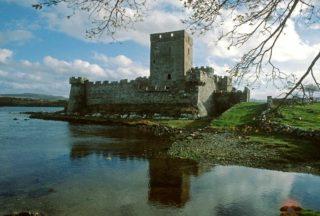
Doe Castle sits on a finger of land in Sheephaven Bay with seawater on three sides and a rock-cut moat — carved from solid bedrock, unique in Ireland — guarding the fourth. Built by the MacSweeney clan in the 15th century, it sheltered Spanish Armada survivors in 1588. The tower house rises roughly 15 metres with walls 2.5 metres thick. The grounds are free to explore year-round; the keep interior opens only by appointment. A short path leads to one of Donegal's oldest graveyards, hidden beyond the main enclosure. The family-run coffee hut beside the castle is a welcome bonus.
- Best time
- Early morning or late afternoon, when the light hits the tower across the bay
- Tip
- For the classic postcard shot, pull into Doe Castle Viewpoint on the opposite bank of the Lackagh River.
3.Carrigafoyle Castle
The tower you can climb over the Shannon
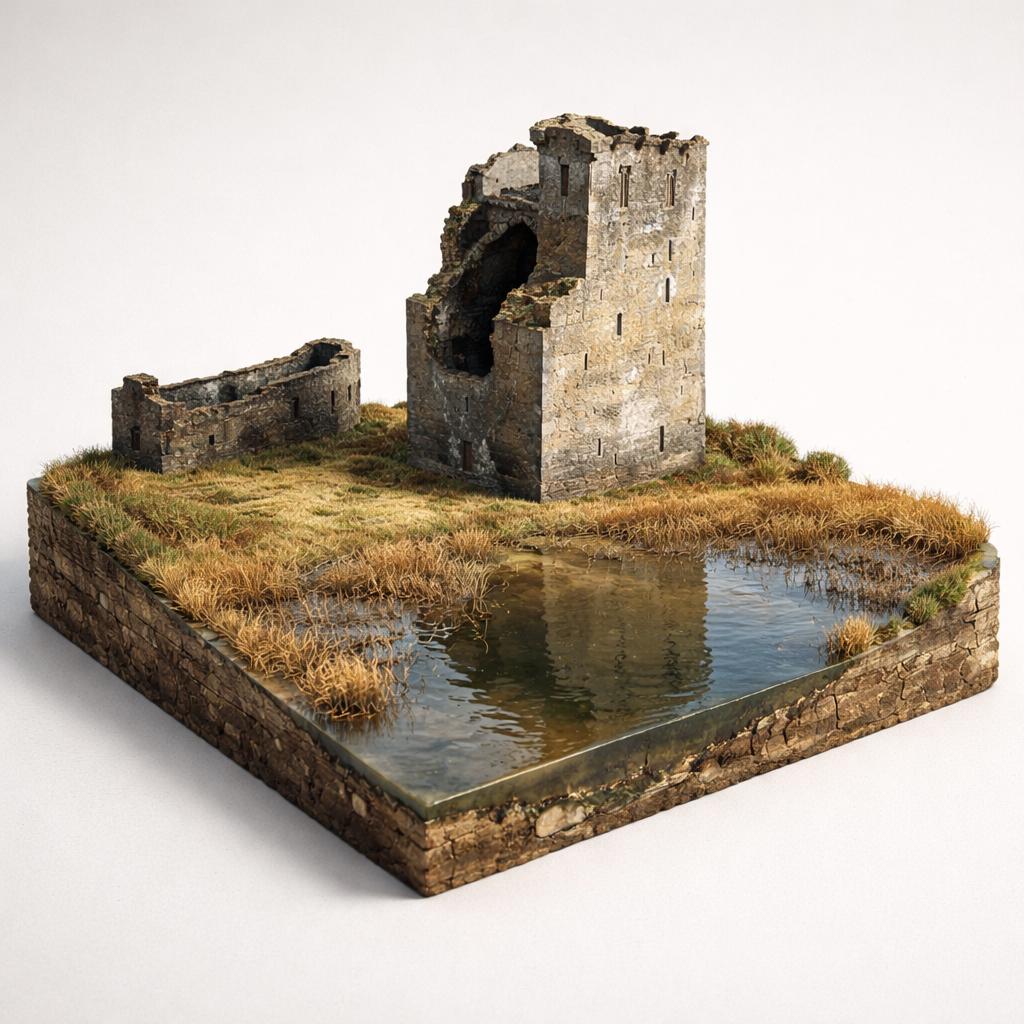
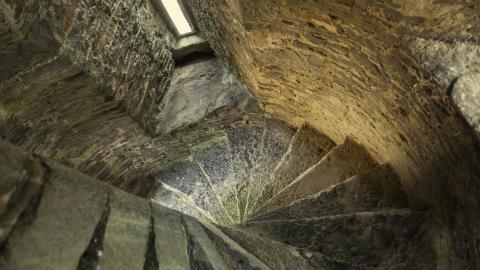
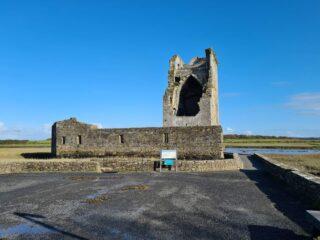
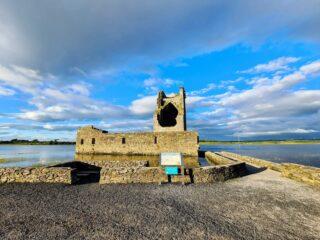
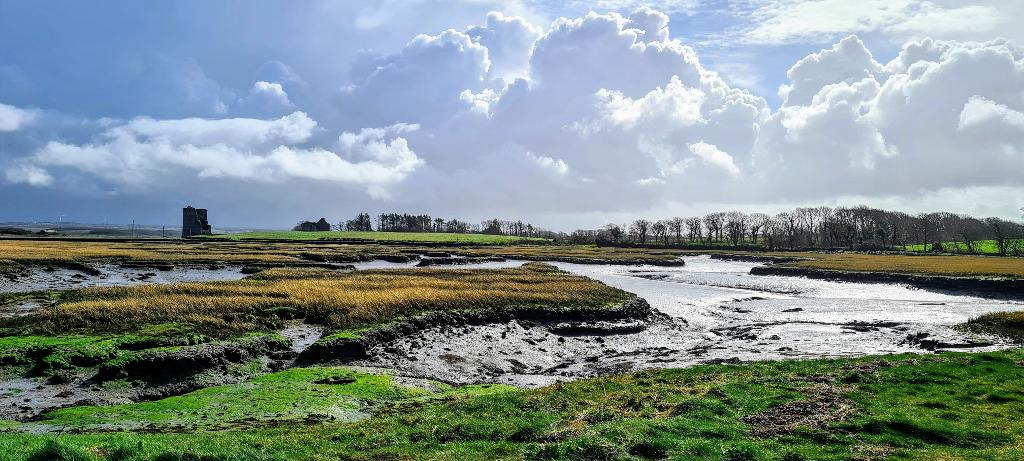
Rising five storeys from the edge of the Shannon Estuary, Carrigafoyle Castle was the 'Guardian of the Shannon' — a 1490s O'Connor Kerry stronghold whose fortified harbour once extracted tolls from passing merchant ships. Today you can climb all 104 steps of the spiral staircase to the battlements for panoramic views across the estuary to Carrig Island and Scattery Island. Look for the scars of cannon fire from the 1580 siege. At low tide, walk around the base to spot the remains of the harbour built into the castle walls. In winter, thousands of migratory birds — Brent geese, whooper swans, waders — feed on the surrounding mudflats.
- Best time
- May to September when the tower is open for internal access; winter for migratory birds
- Tip
- Time your visit for low tide to see the old harbour walls, and bring binoculars for the birdlife.
4.Ballybunion Castle
The castle between two Blue Flag beaches
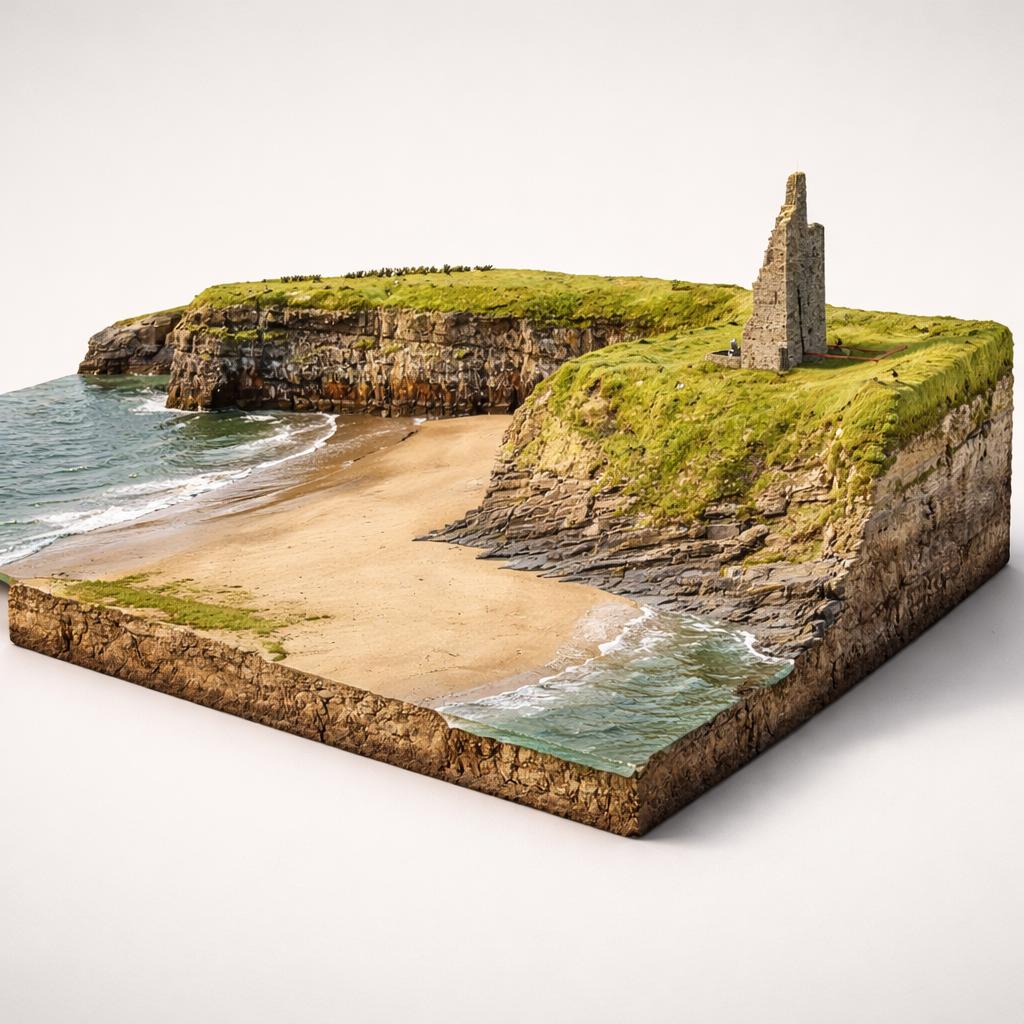
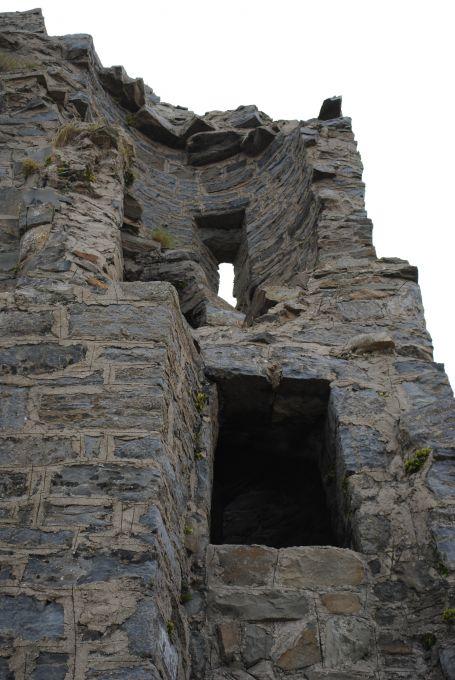
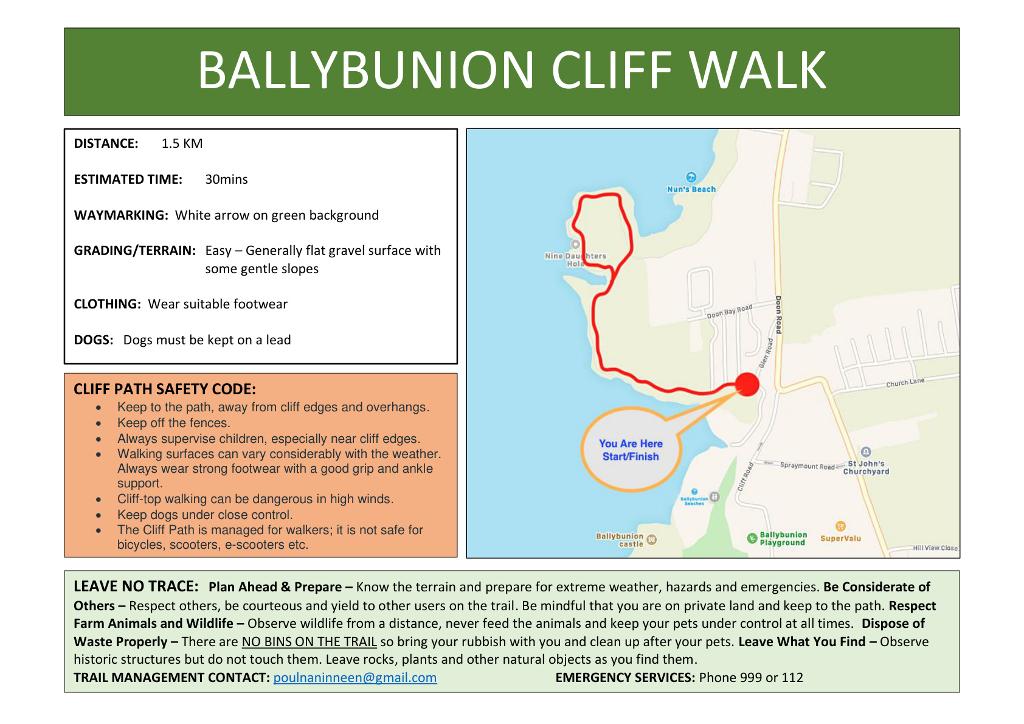
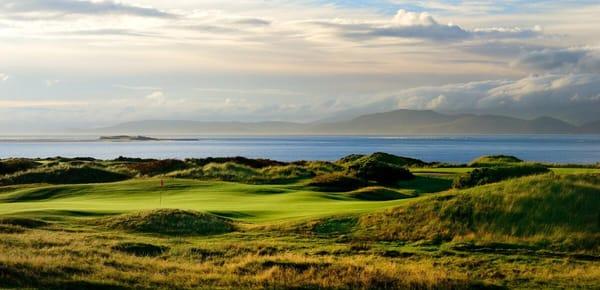
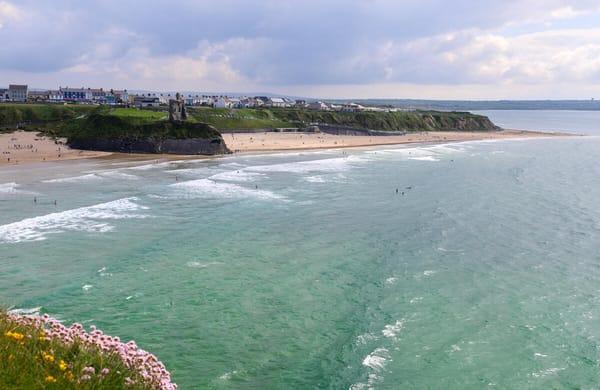
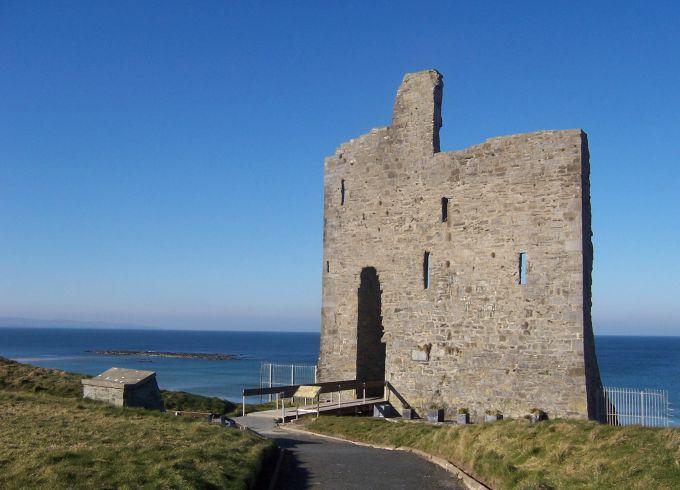
Only the 12-metre east wall of this 16th-century Geraldine tower house still stands, but its position is unforgettable — perched on a cliff edge with Ladies Beach curving away to the north and Men's Beach to the south. Climb the worn anti-clockwise spiral staircase (unique to north Kerry) into what remains of the four-storey stronghold. A 1.5 km waymarked cliff path starts beside the Cliff House Hotel, leading past the Nine Daughters' Hole blowhole. Both beaches hold Blue Flag status; Men's Beach has a surf school. The castle is an unfenced open-air ruin — accessible every day, year-round, with no gates or barriers.
- Best time
- April to September, when the town is buzzing and both beaches are lifeguarded
- Tip
- Avoid the private car park at the top of the beach entry that charges €5 — use the free parking near the playground instead.
5.Nenagh Castle
Ireland's finest cylindrical keep — with a free guided tour
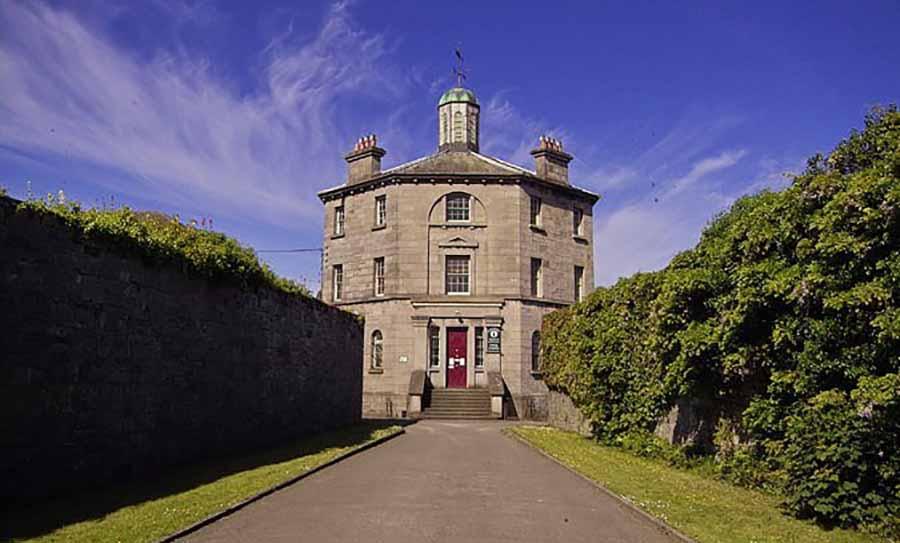
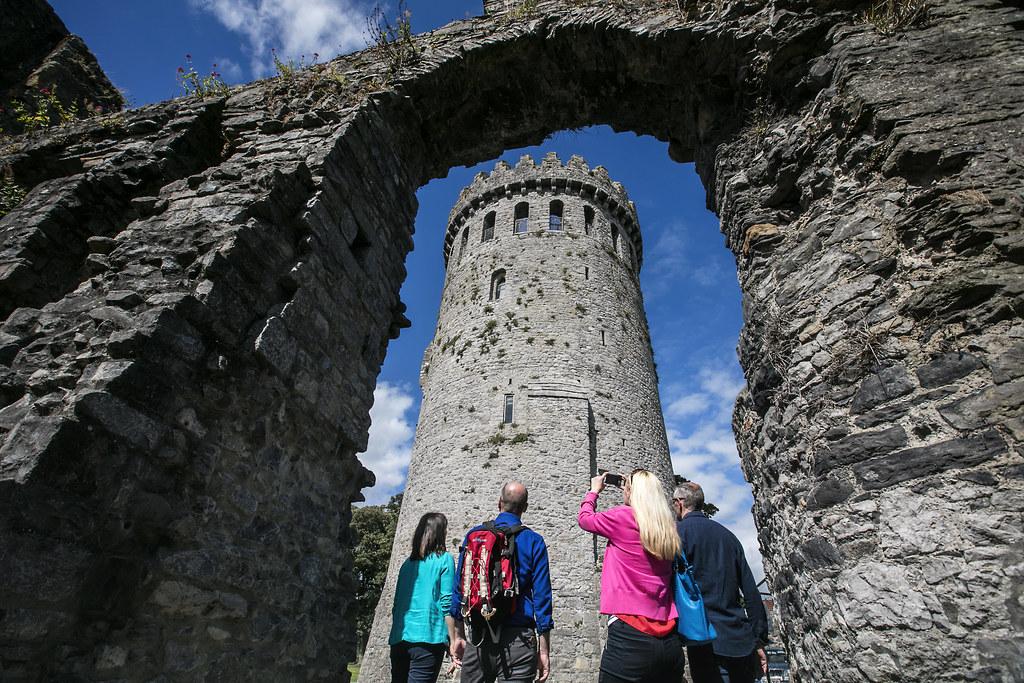
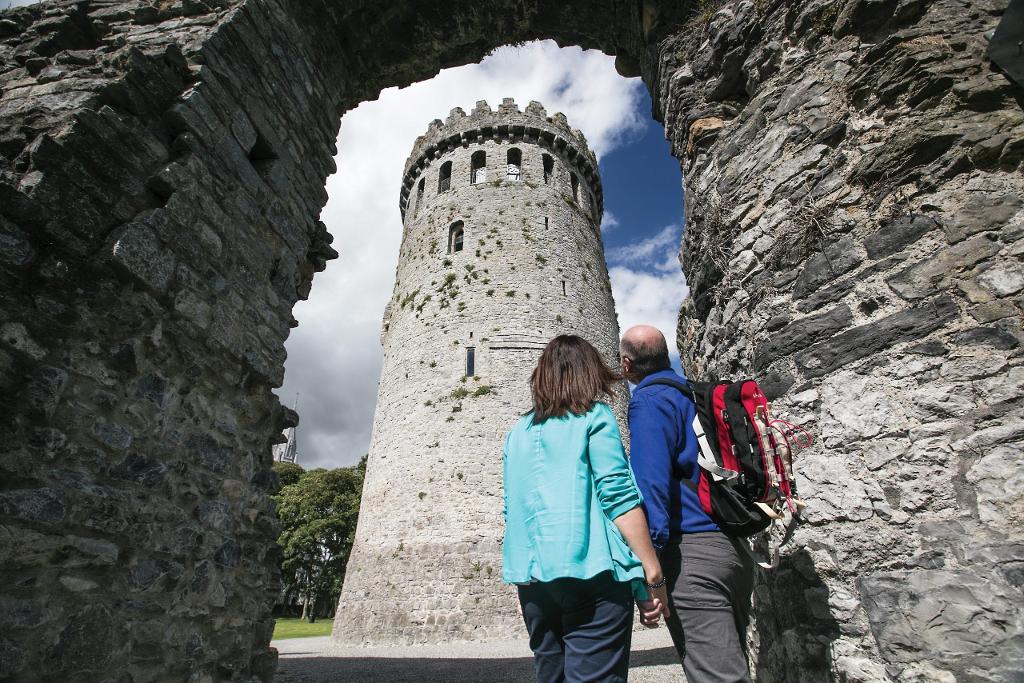
Nenagh Castle's 13th-century cylindrical keep is the finest of its kind in Ireland, with walls up to 5 metres thick at the base. Climb the 101-step stone spiral staircase — mind your head through the low entrance passage — to a limestone-floored rooftop 30 metres up. The 360° view takes in the Silvermines Mountains, Lough Derg, and Tipperary farmland. Free 30–40 minute guided tours are led by local historians who bring the Butler dynasty and a 1760 gunpowder-and-sparrows incident vividly to life. The quiet castle garden at the base is ideal for a picnic. Open Tuesday to Saturday, April to October.
- Best time
- Late afternoon for the best rooftop light; visit midweek for a quieter tour
- Tip
- Pre-book the free guided tour, especially for groups — and phone ahead in winter when hours are restricted.
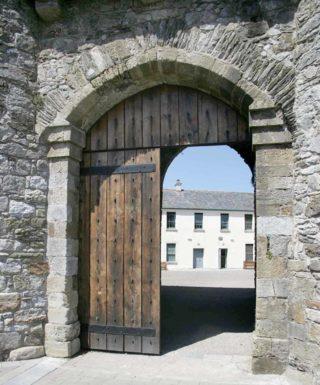
6.Dungarvan Castle
The rare shell keep with 800 years of stories
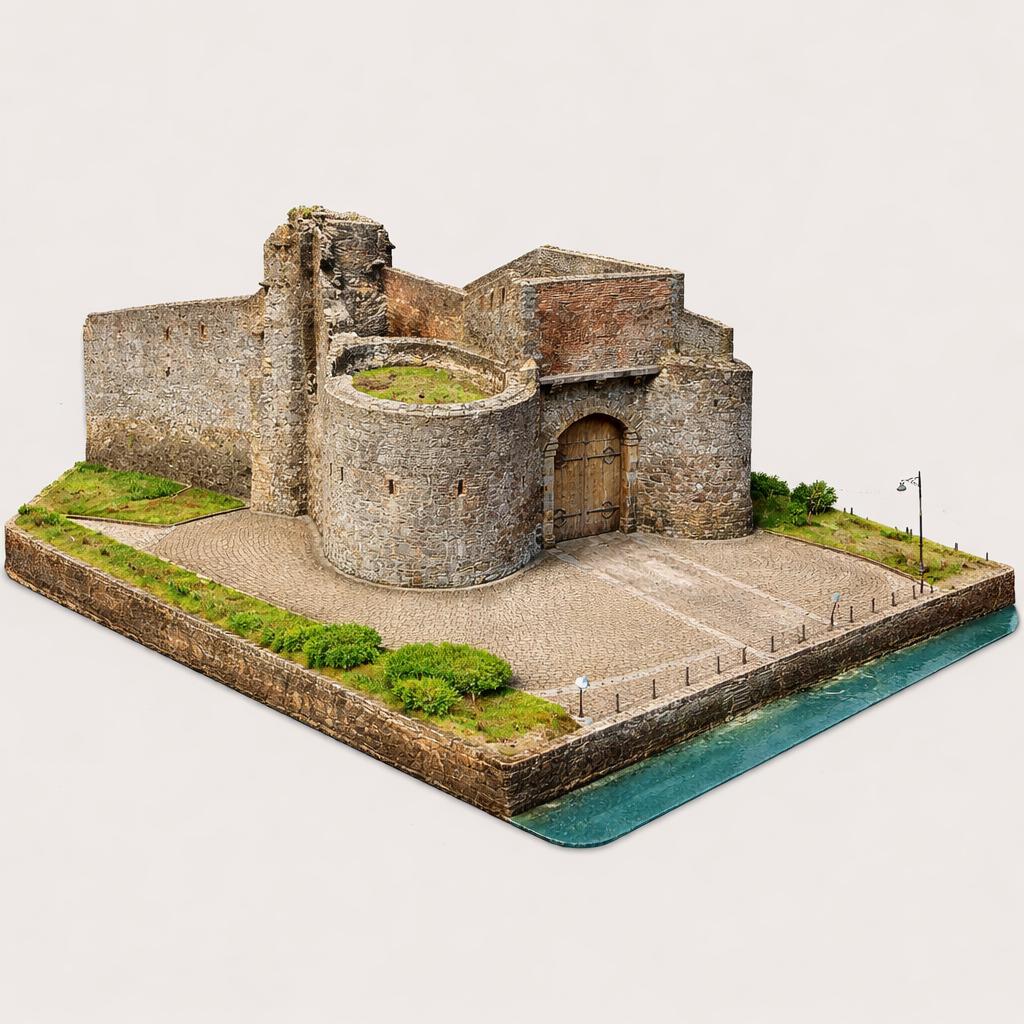
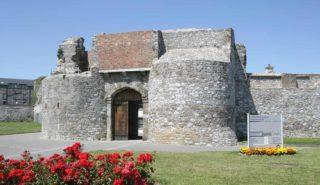
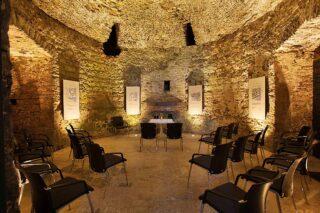
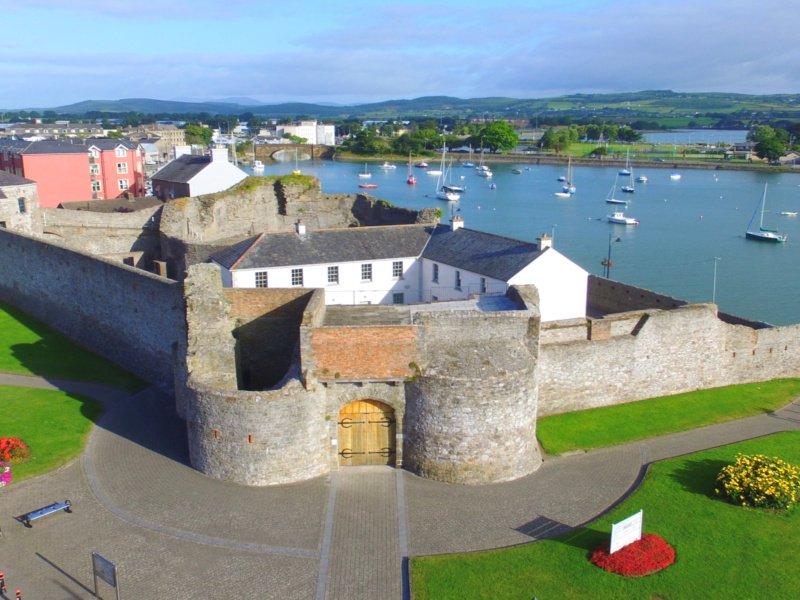
Built around 1209 on the orders of King John, Dungarvan Castle is one of the few Norman royal castles in Ireland — and its polygonal shell keep is a rarity. Free guided tours (20–30 minutes) take you through the restored 18th-century barracks, an audiovisual show, and an exhibition spanning Norman, British Army, RIC, and Garda Síochána eras. Climb the renovated South West Tower for panoramic views over Dungarvan Harbour and the Comeragh Mountains. The castle sits right at the end of the 46 km Waterford Greenway, making it an ideal cycling pit stop. Open daily late April to end of September.
- Best time
- Late April to September (the only months it's open); dry days for the tower steps
- Tip
- Cycle in from the Waterford Greenway — park your bike outside and spend 30–60 minutes exploring before heading into town for food.
7.Castledonovan
The tower blasted apart by Cromwell
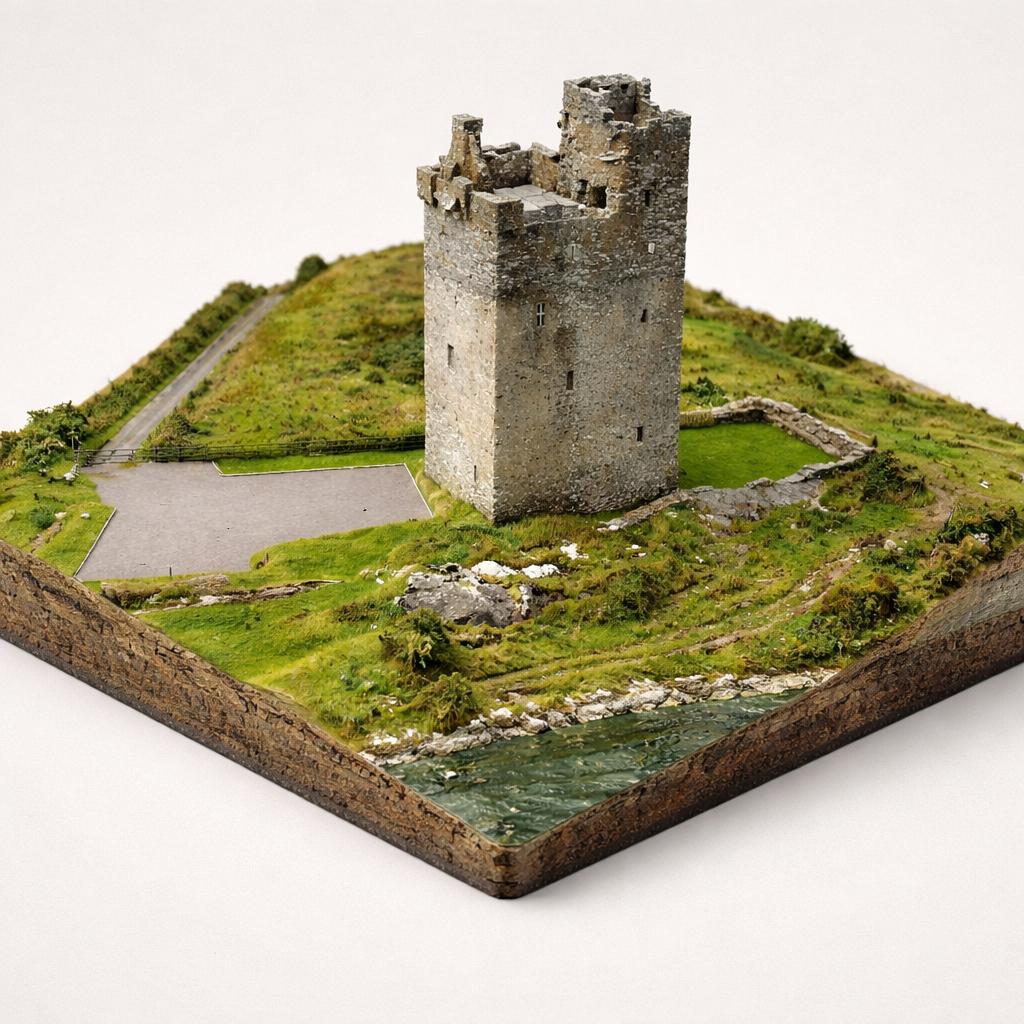
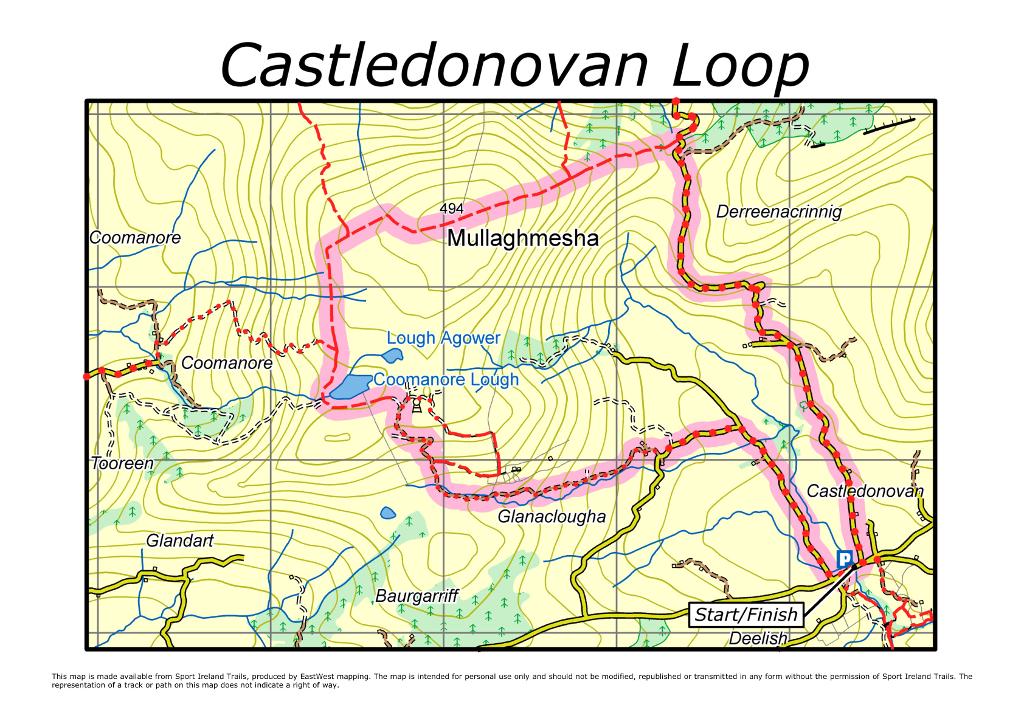
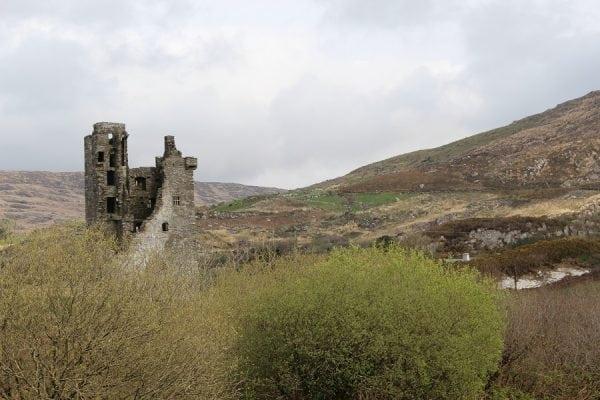
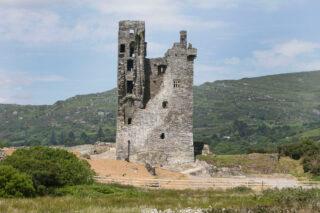
Isolated on a rocky outcrop above the River Ilen in West Cork, Castledonovan is a 16th-century O'Donovan clan tower house with a story you can read in its stone: the entire south-west corner was blown out by Cromwellian cannon in the 1640s. Peer up at intact fireplaces on the upper floors, study the machicolation above the doorway and the surviving bartizans at the corners, then spot the rare medieval cereal-drying kiln just west of the tower. The waymarked 11 km Castledonovan Loop climbs Mullaghmesha Mountain for views over Bantry and Dunmanus Bays. Always open — an unguided National Monument, never locked.
- Best time
- Golden hour, when low sun catches the limestone walls against the mountain backdrop
- Tip
- The car park holds only about 5 cars — arrive early, especially in summer.
8.Dunboy Castle
The siege castle on the Beara Peninsula
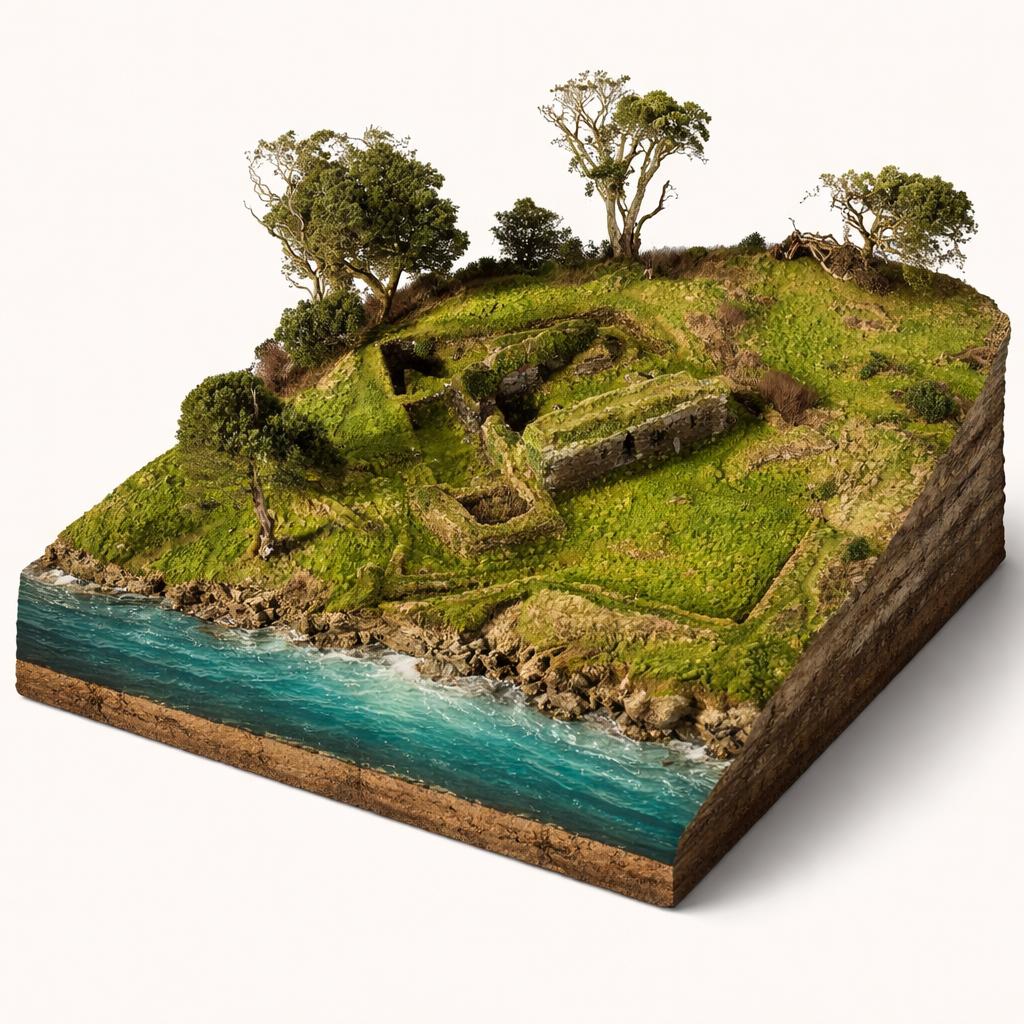
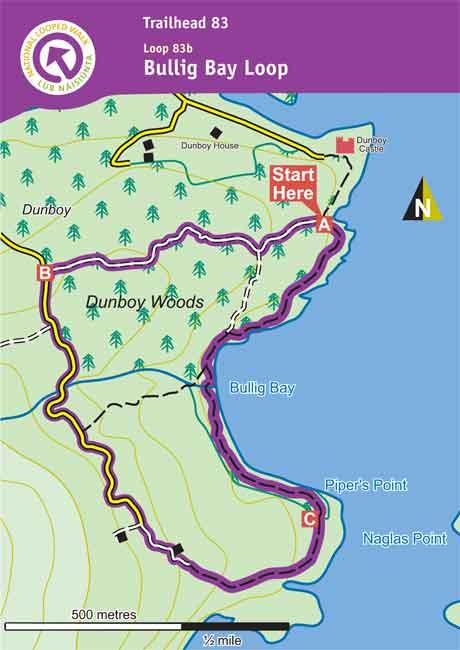
In 1602, 143 defenders of the O'Sullivan Bere clan held Dunboy Castle for 11 days against 4,000–5,000 English troops. Walk through the low stone footings of the tower house today, trace the mural stairs and garderobe shafts, and read the gripping siege story on interpretive panels. Beside the tower-house ruins, star-shaped earthworks mark a Cromwellian bastion fort. The headland path opens up views across Berehaven Sound to Bere Island and its lighthouse. On the lane in you pass the shell of Puxley Mansion — burned in 1920, it inspired Daphne du Maurier's novel Hungry Hill. Free, unstaffed, always open.
- Best time
- Early morning or late afternoon for the calmest wind and best light on the headland
- Tip
- The car park at the end of the lane holds only 2–3 cars — arrive early or outside peak times.
9.Moore Hall
The ruined mansion on Lough Carra
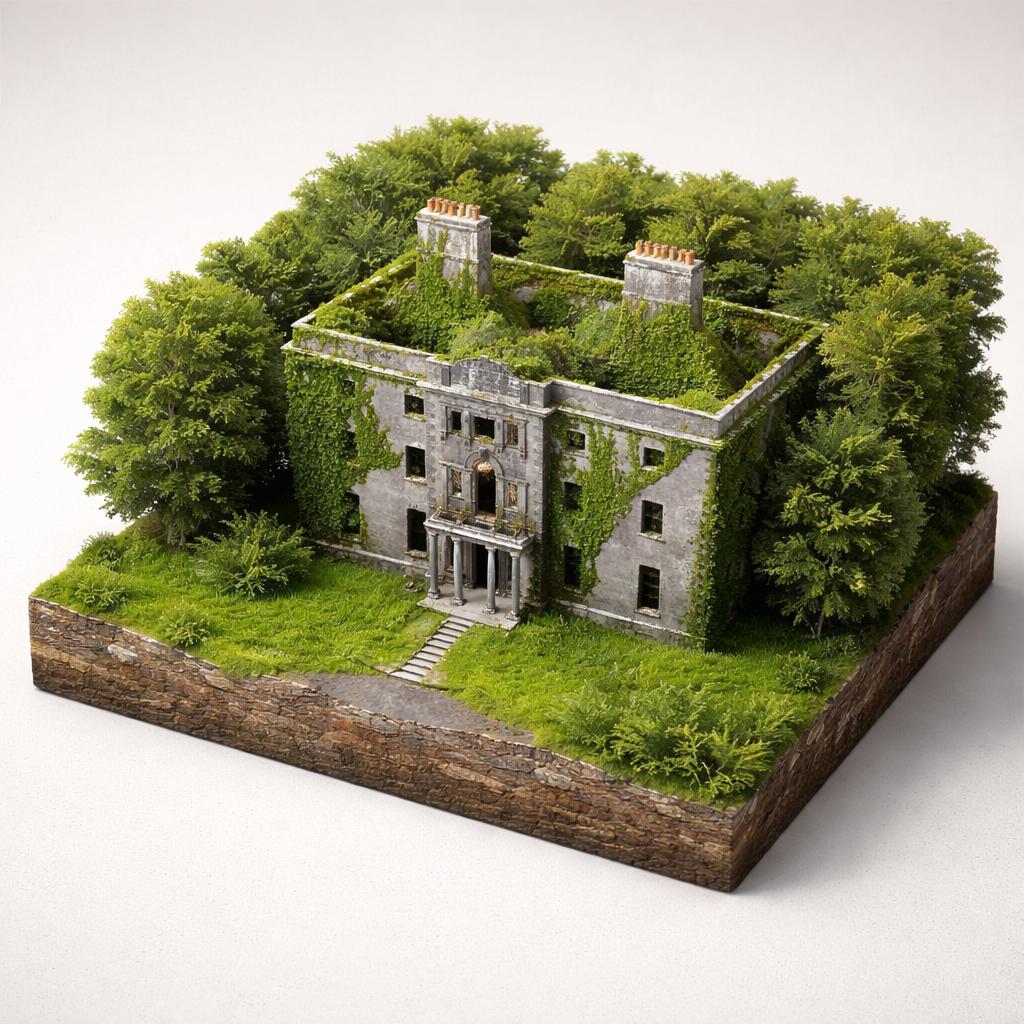
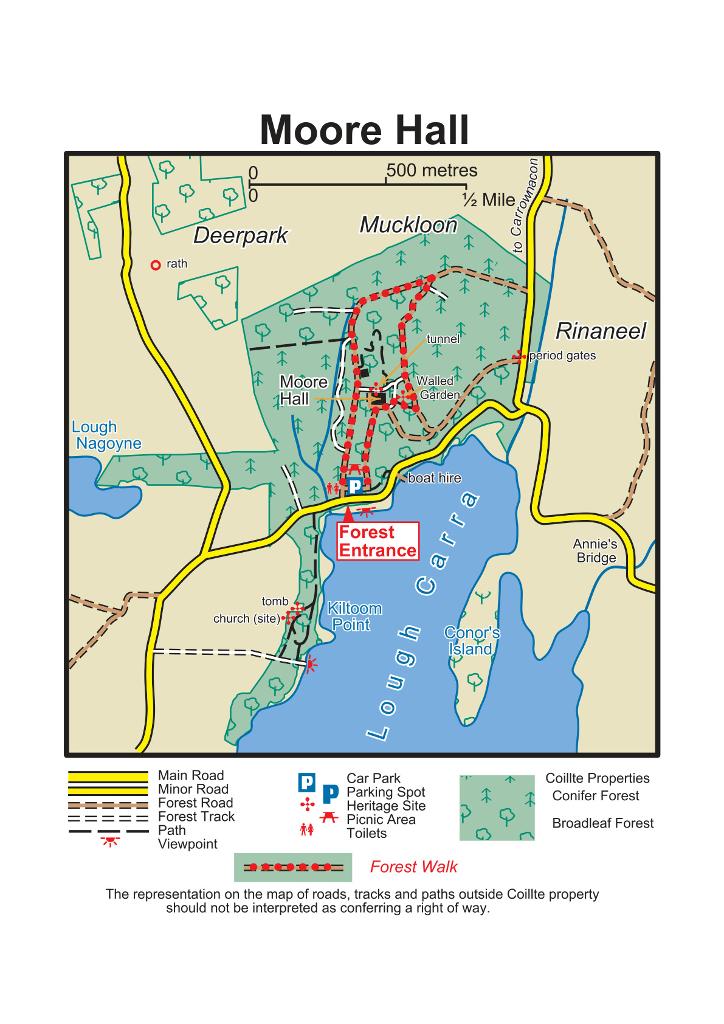
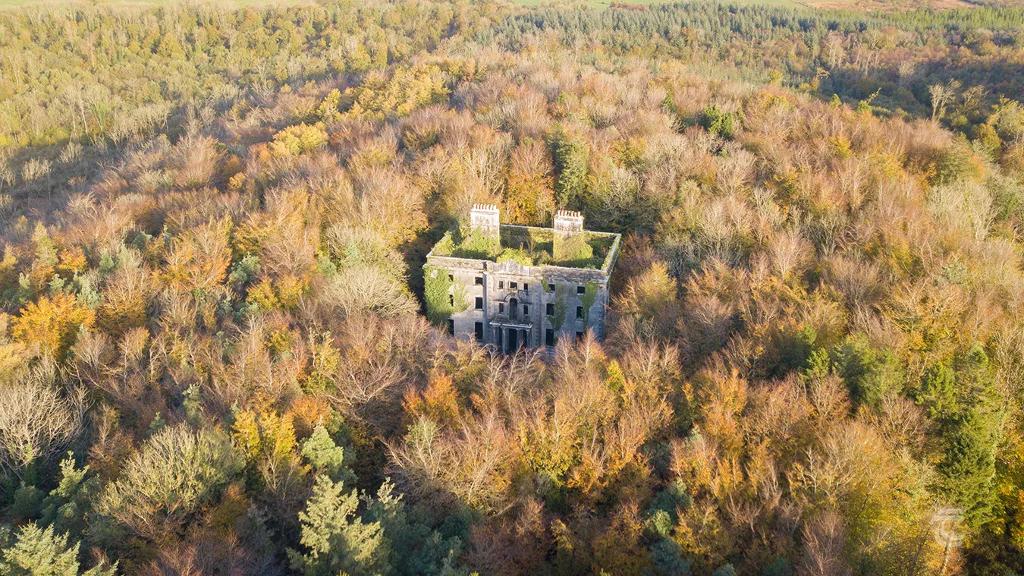
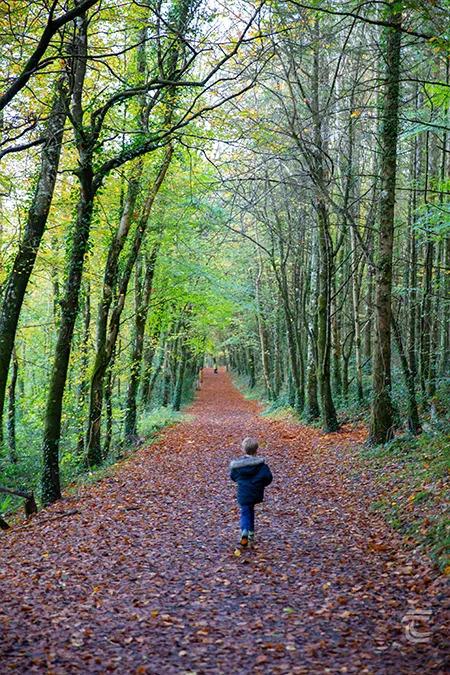
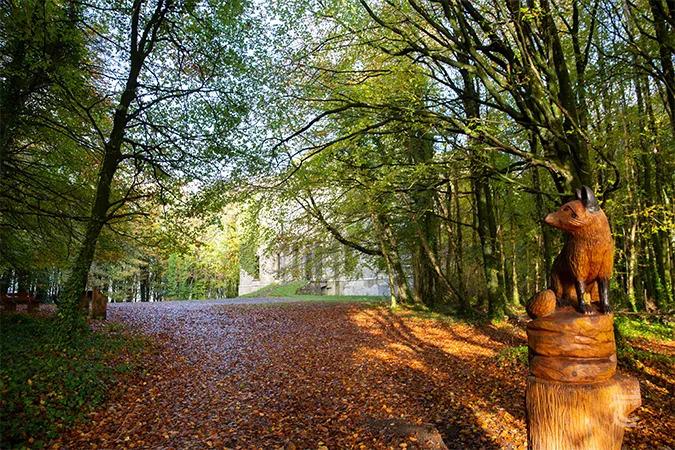
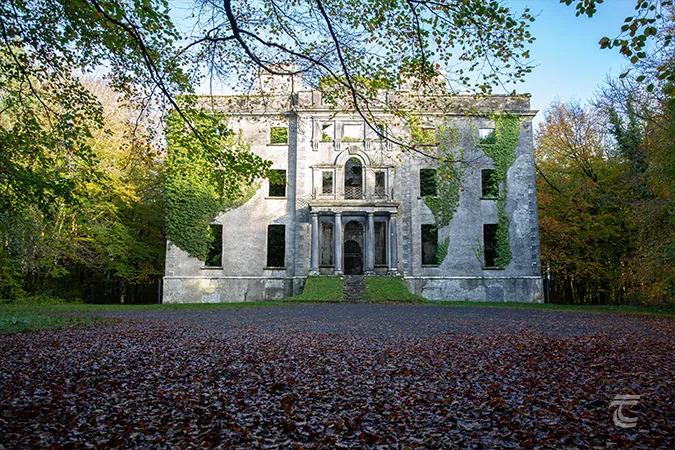
Moore Hall is the ivy-clad shell of a grand 1792 Georgian mansion, burned during the Civil War in 1923. Its empty windows, colonnaded doorway, and the family motto 'Fortis Cadere Non Potest' are still visible on the exterior. A well-surfaced gravel loop of about 2–3 km winds through mixed woodland past the ruin, the old walled garden under restoration, and wooden wildlife sculptures — foxes, owls — that keep children engaged. Cross the road from the car park for shore access on Lough Carra and a small sandy beach. A playground and picnic tables near the car park make this an easy family outing.
- Best time
- Autumn, when the woodland colours are at their best around the ruin
- Tip
- The playground and picnic tables near the car park make this one of the best castle-and-family combos — bring lunch.
10.Clifden Castle
The Gothic ruin at the start of the Sky Road
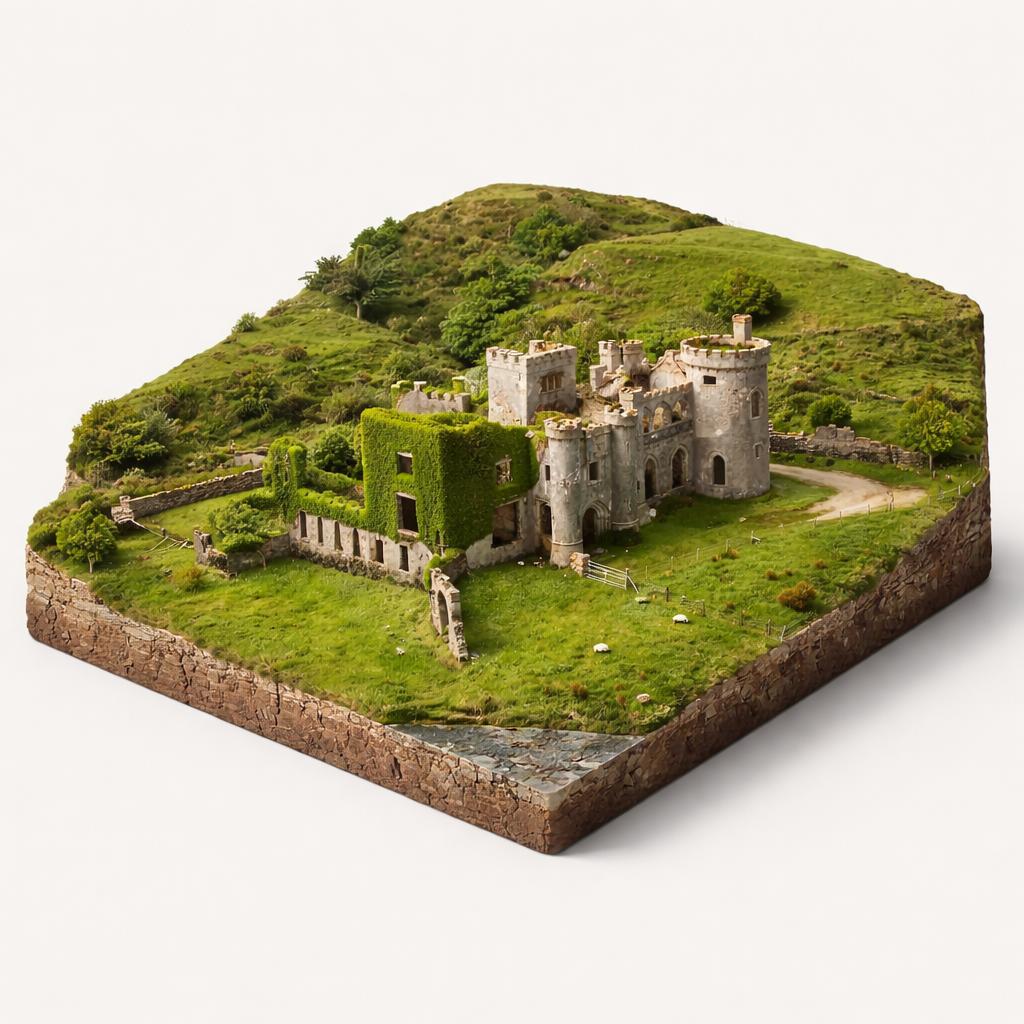
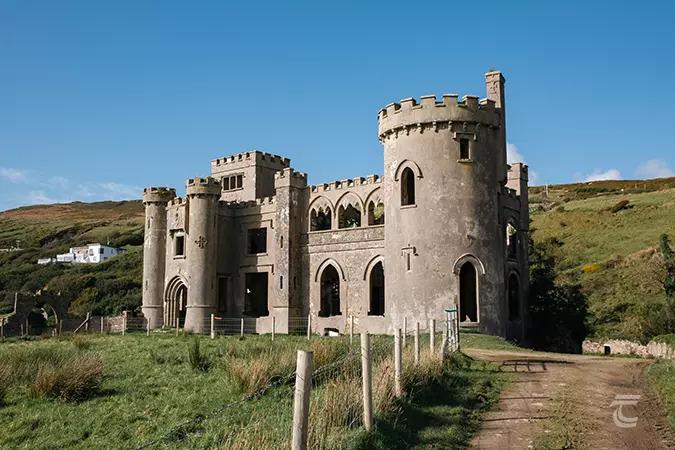
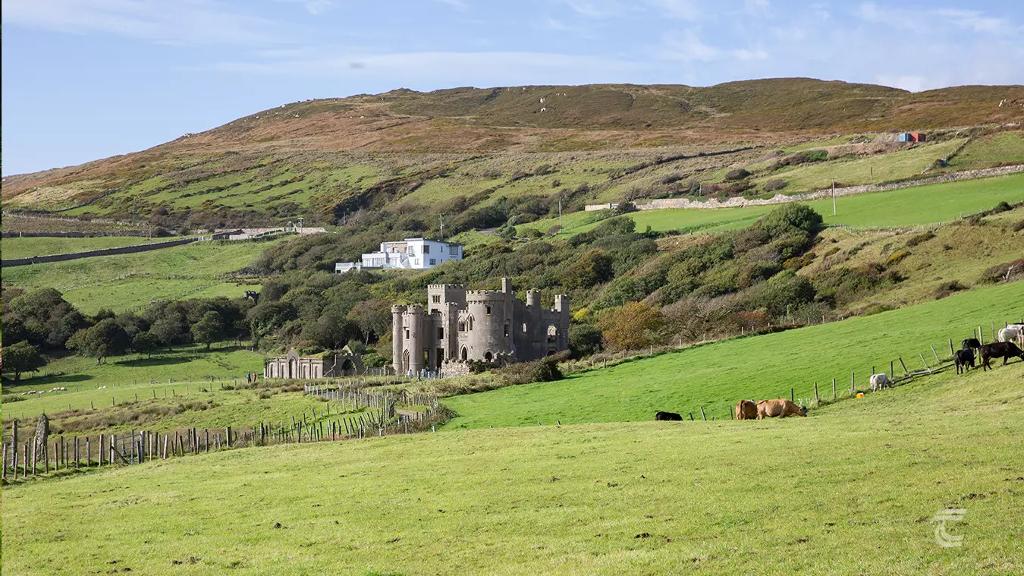
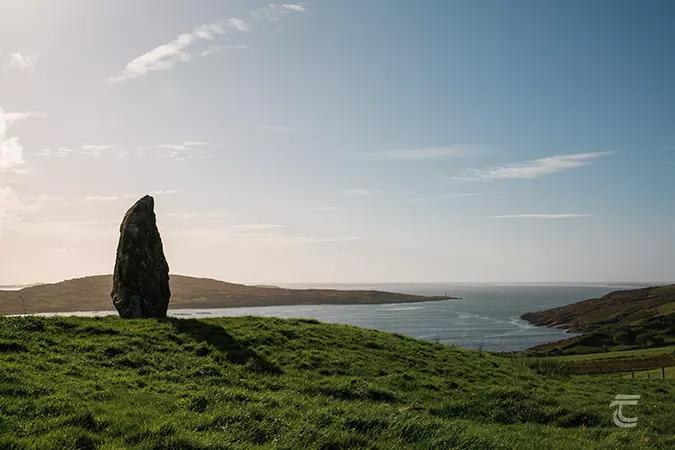
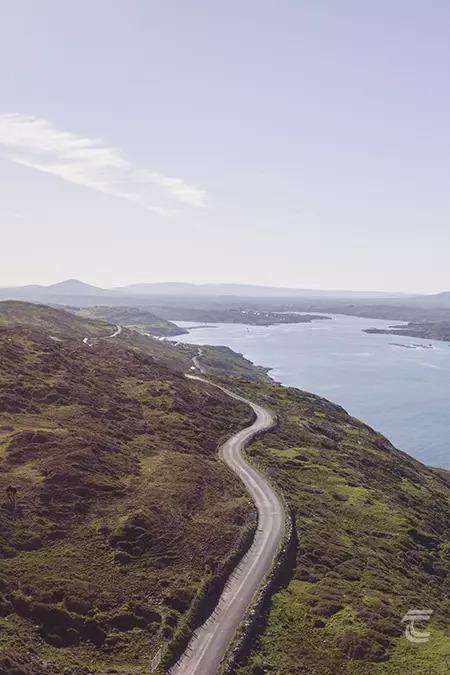
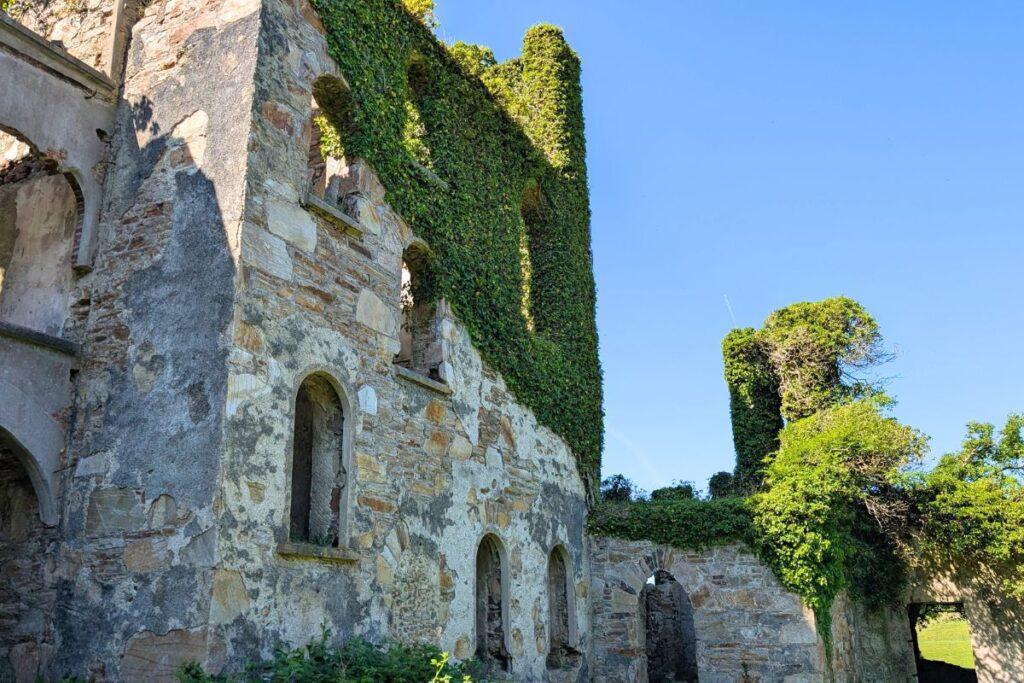
Clifden Castle is a roofless Gothic Revival manor from 1818, hidden down a 1 km farm track off Connemara's Sky Road. The approach — past mock standing stones erected by the estate's builder as ornaments for his children — sets the tone. Walk around the back for the most photogenic angle: thick ivy blankets the walls, and pointed-arch windows frame views over Clifden Bay. The castle stands on private land with no facilities, and the dirt path turns muddy fast, but the reward is one of Connemara's most atmospheric free ruins — and the perfect prelude to driving the 16 km Sky Road loop.
- Best time
- Late spring to early autumn for drier conditions; mornings are quietest
- Tip
- Wear waterproof boots outside summer — the approach path floods after rain. Park at the small gravel pull-off by the stone gateway arch (3–6 cars only).
11.Ballysaggartmore Towers
The Gothic gateway to a mansion that was never built
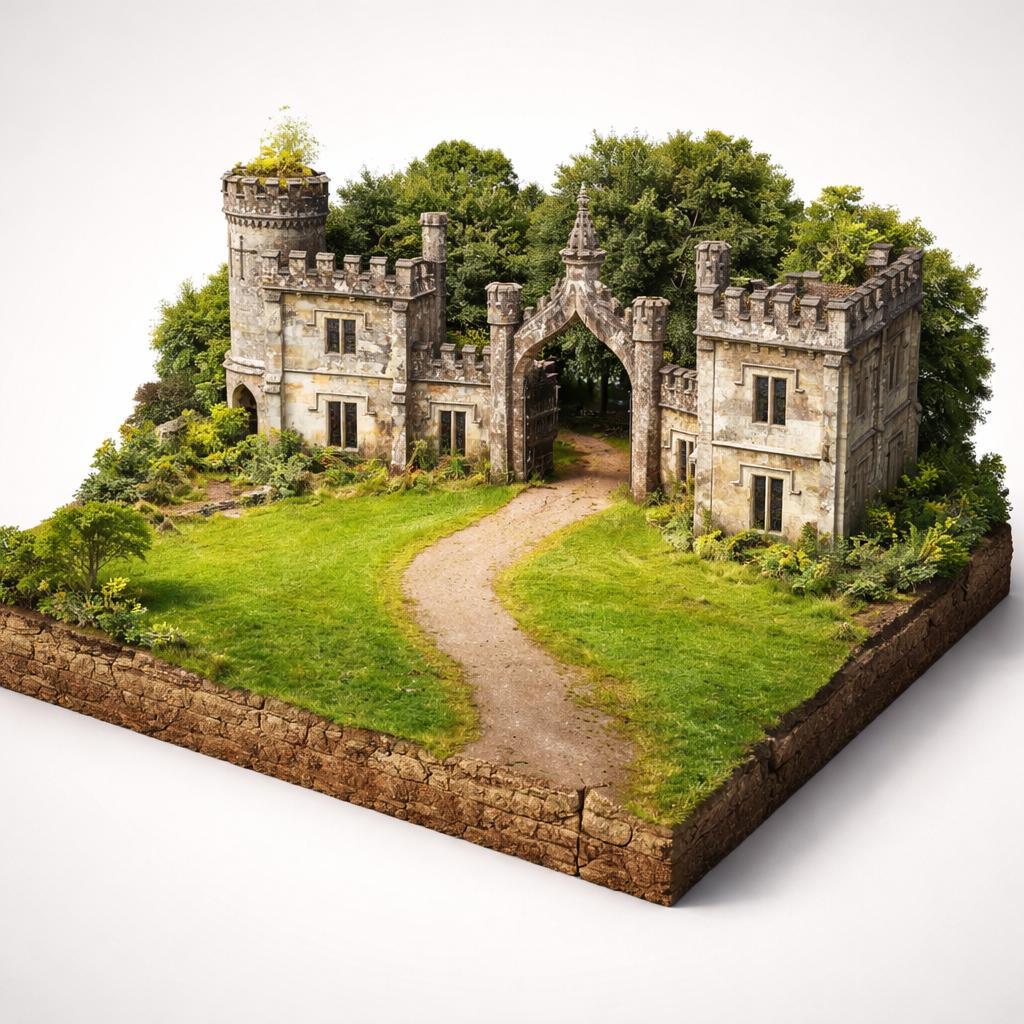
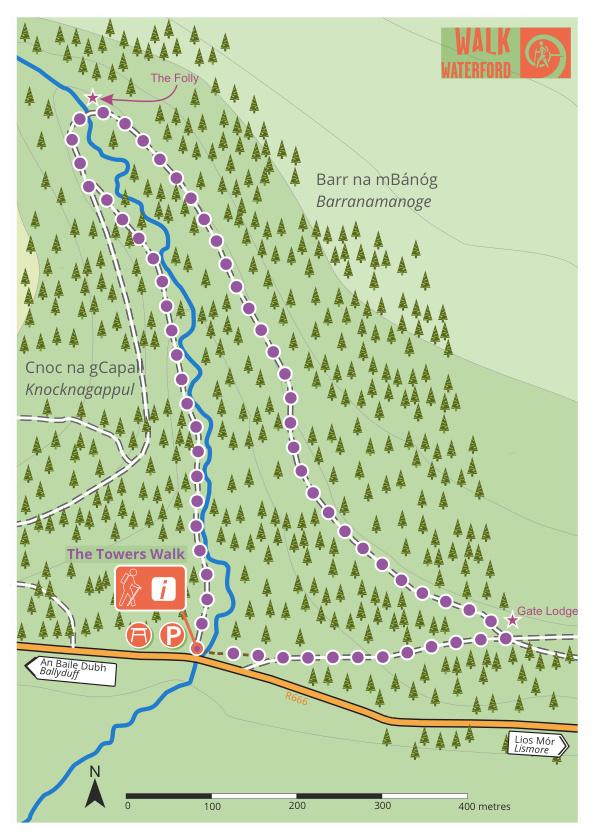
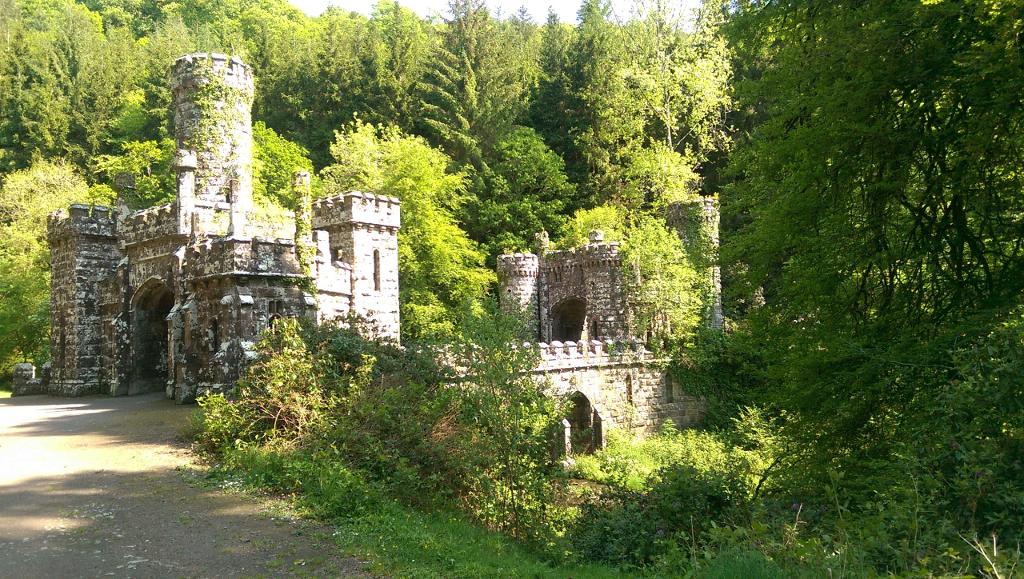
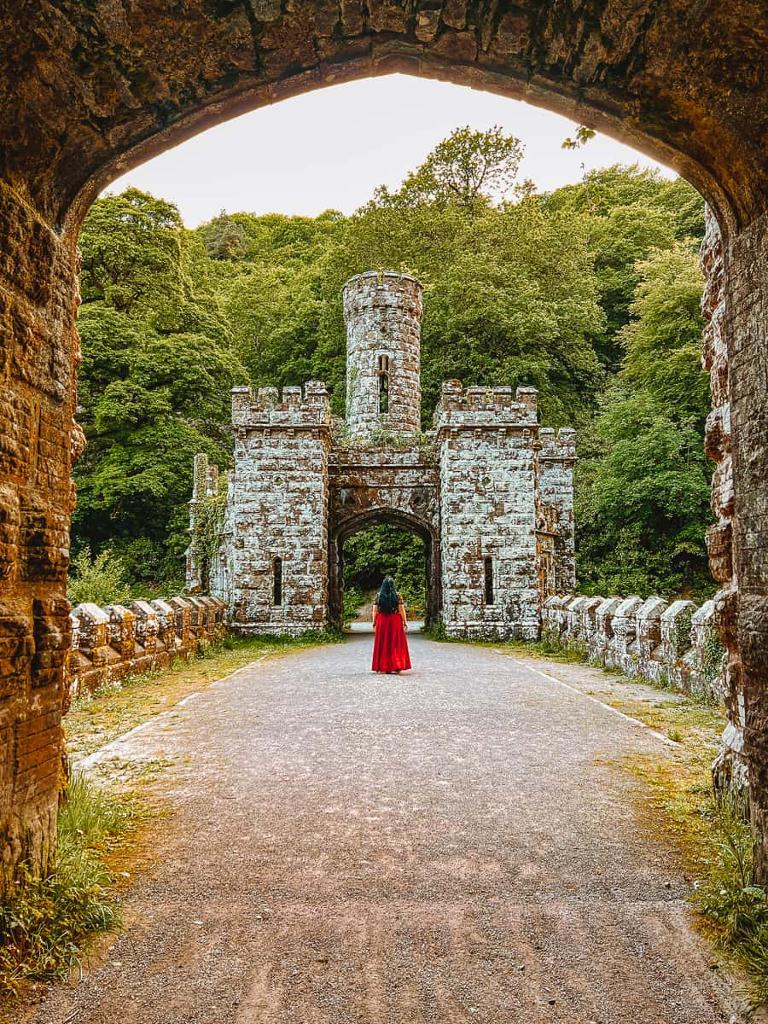
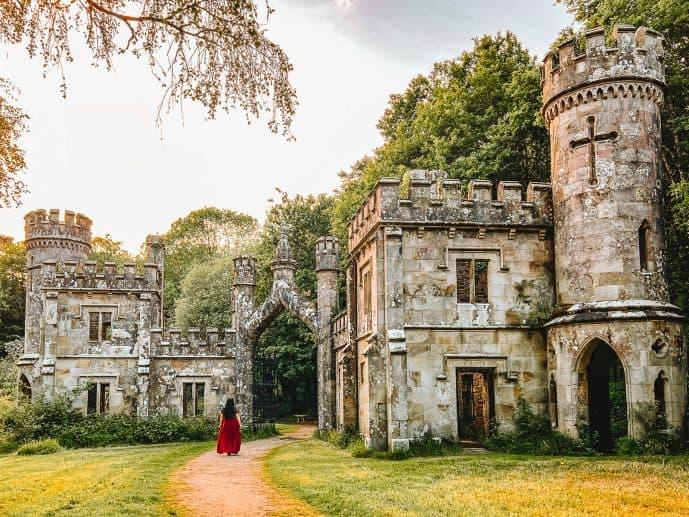
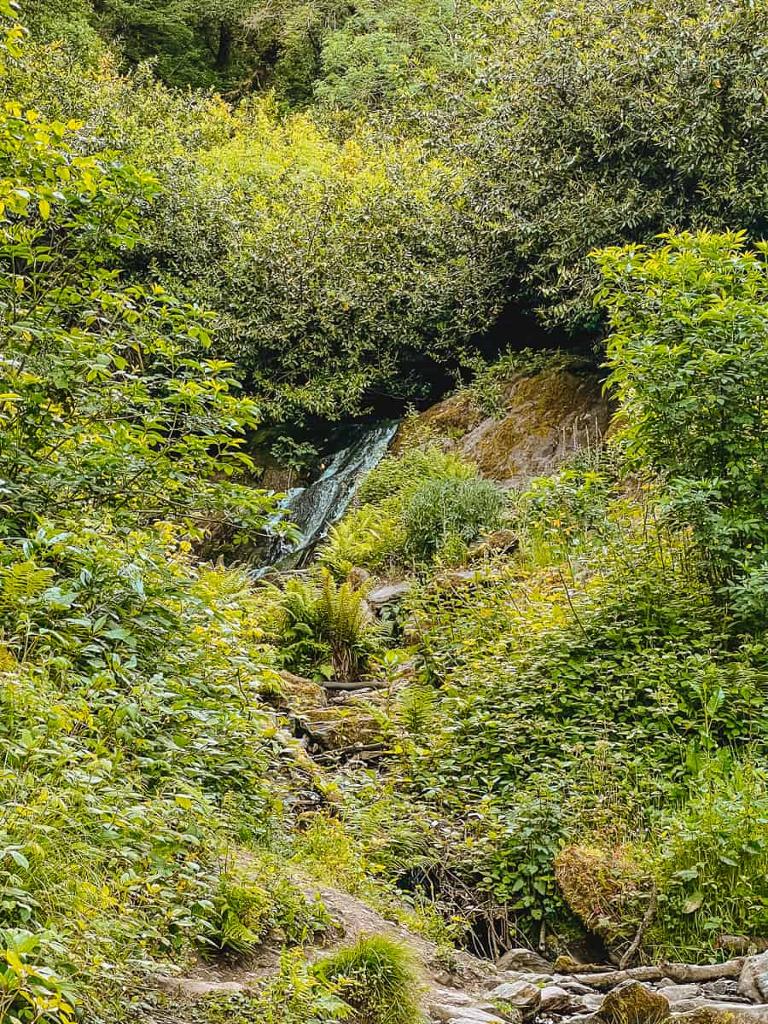
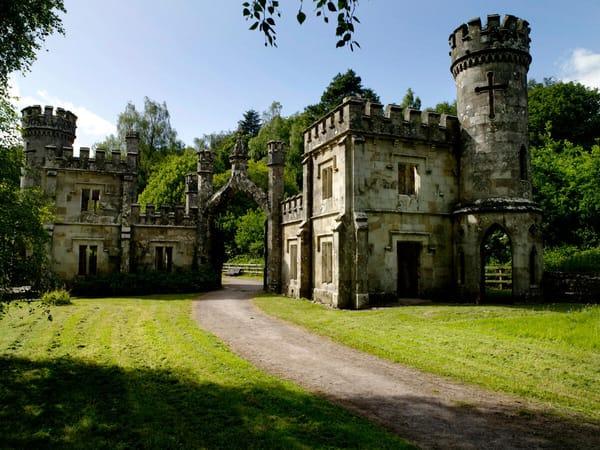
In the 1830s, Arthur Kiely-Ussher planned a grand mansion near Lismore. He built the extravagant gateway first — two ornate Gothic Revival towers connected by a stone bridge over a wooded ravine — and then ran out of money. The mansion never materialised, but the gateway remains, draped in moss and ivy. A 2 km gravel loop through mature oak and ash woodland leads to the towers, the roofless gate lodges, and a small waterfall. Picnic tables are scattered near the ruins. It takes 30–45 minutes at a relaxed pace, and dogs are welcome on a lead. Completely free, no booking, open dawn to dusk.
- Best time
- Spring for bluebells and rhododendrons; weekday mornings are quietest
- Tip
- Visit in late April or May when bluebells and wild garlic carpet the woodland floor.
12.Staigue Stone Fort
The 5.5-metre-high ringfort built without mortar
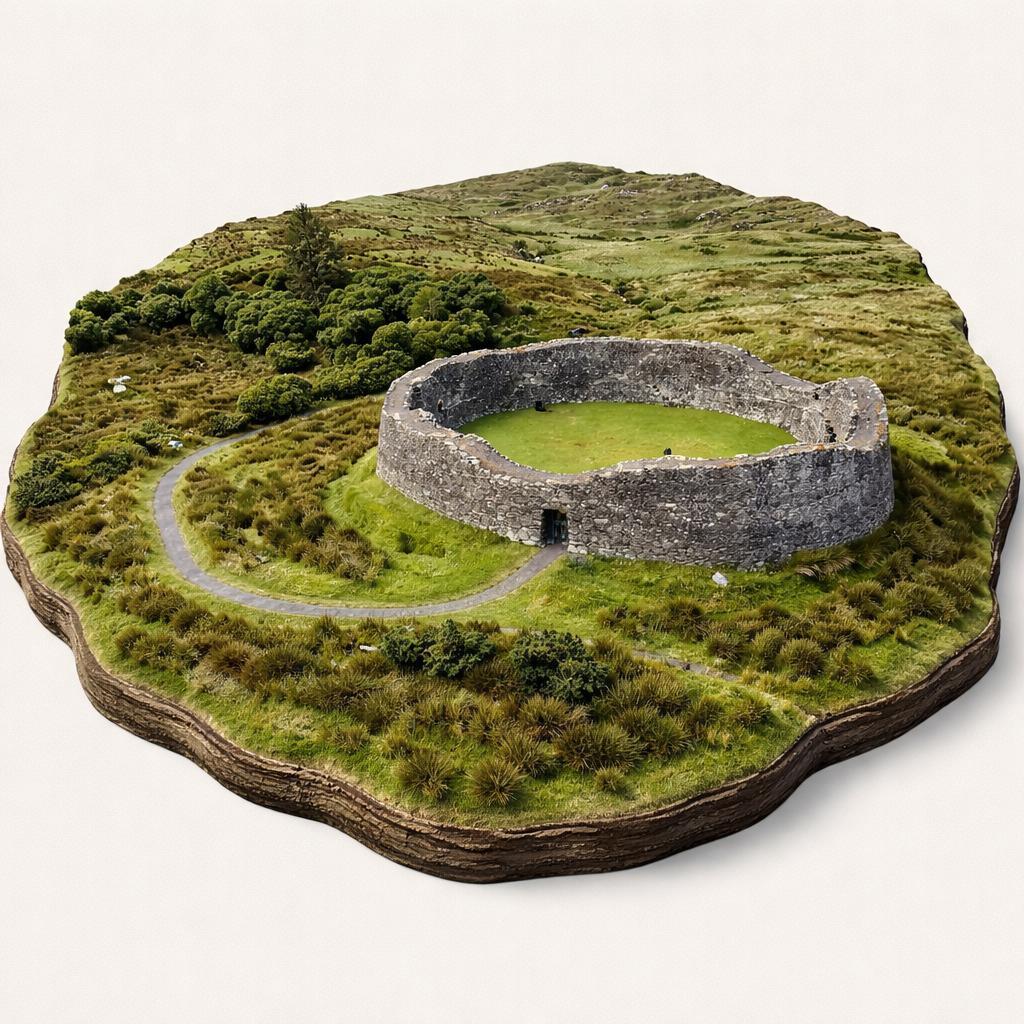
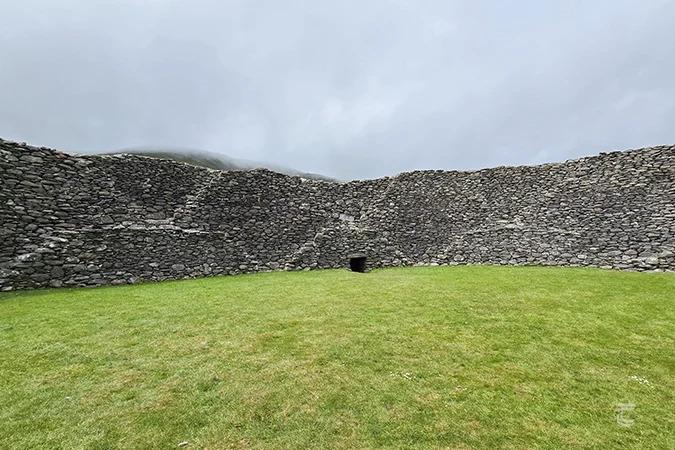
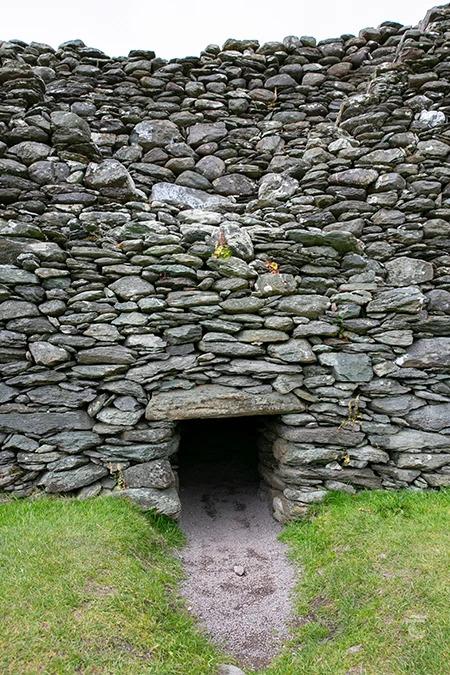
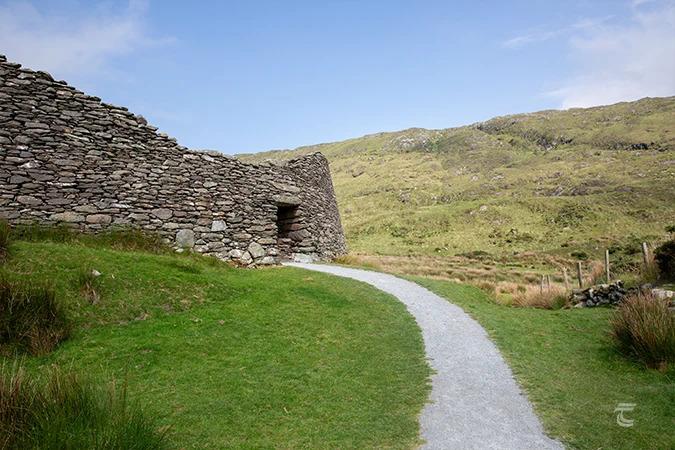
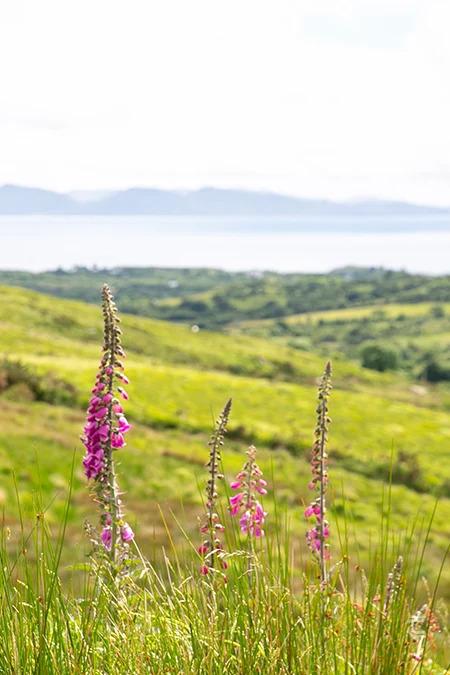
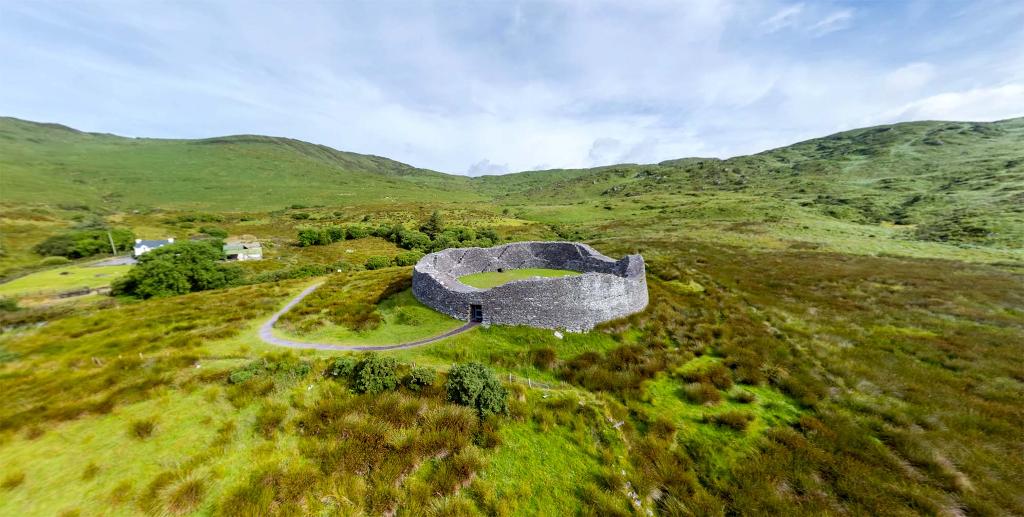
Staigue Stone Fort is one of Ireland's largest and best-preserved ringforts — a circular drystone enclosure with walls up to 5.5 metres high and 4 metres thick, built around 300–400 AD without a drop of mortar. Ten sets of X-shaped staircases climb the inner wall to narrow ramparts. Two corbelled intramural chambers are hidden within the walls — the north-western one has a roof you can stand up in. The fort commands a stunning view down the Staigue valley to Kenmare Bay. It sits on the Ring of Kerry but feels a world apart: an honesty-box donation of €1 is suggested at the gate.
- Best time
- Summer, when fuchsia hedgerows line the approach path and daylight lasts longest
- Tip
- Squeeze into the southern intramural chamber if you can — it's the highlight for adventurous visitors.
Practical tips
- Check seasonal opening hours before travelling — Dungarvan Castle, Nenagh Castle and Listowel Castle all operate limited seasons (roughly April to September).
- Many of these sites have no toilets, no café, and no drinking water. Carry supplies and know where the nearest town is before you set out.
- Sturdy footwear is essential at almost every site — spiral staircases are steep and uneven, and grassy slopes turn slippery after rain.
- Several car parks are tiny (Dunboy: 2–3 cars; Castledonovan: ~5 cars; Clifden Castle: 3–6 cars). Arrive before 10am on weekends and in summer.
- Dogs are welcome at Moore Hall, Ballysaggartmore Towers, Dunboy Castle, and Castledonovan — all on leads. Most other sites are unmarked for dog access; check locally.
- The OPW-run sites (Dungarvan, Nenagh, Listowel) offer free guided tours with excellent guides — take them. You'll get far more from the visit than going solo.
- A €1 honesty-box donation is suggested at Staigue Stone Fort. It helps the landowners maintain the site — bring a coin.
Frequently asked questions
Are there really castles in Ireland you can visit completely free?
Yes — and more than you might think. Many of Ireland's tower houses, ringforts and ruined fortresses are unstaffed National Monuments with no admission charge. The OPW also operates several castles with free entry and free guided tours, including Nenagh Castle, Dungarvan Castle and Listowel Castle. The trade-off is that facilities are often minimal — no visitor centres, no cafés, and sometimes no toilets.
Which free castle is best for families with young children?
Moore Hall in Mayo has a playground, picnic tables, lakeside beach access, and wooden wildlife sculptures along an easy 2–3 km gravel loop — all free. Mallow Castle in Cork (free grounds) has an award-winning natural playground with a zip line and castle-themed slides. Ballybunion Castle pairs its clifftop ruin with two Blue Flag beaches, and Ballysaggartmore Towers has a short, flat woodland walk manageable for small legs.
Can you go inside these castles, or are they external only?
Several allow full interior access: Carrigafoyle Castle has a 104-step spiral staircase to the battlements, Nenagh Castle lets you climb 101 steps to the rooftop, and Listowel Castle runs free guided tours through its twin towers. Dungarvan Castle's free tour includes the barracks exhibition. Others — like the Rock of Dunamase, Clifden Castle, and Moore Hall — are roofless ruins you walk through at ground level. Doe Castle's keep is by appointment only.
Are these sites open in winter?
Most unstaffed ruins — the Rock of Dunamase, Castledonovan, Dunboy Castle, Staigue Stone Fort, Ballybunion Castle, Clifden Castle, Moore Hall, and Ballysaggartmore Towers — are accessible year-round during daylight hours. The OPW-staffed sites (Dungarvan Castle, Nenagh Castle, Listowel Castle) close between October and April. Carrigafoyle Castle's tower interior is open mid-May to late October only; the exterior can be viewed year-round.
Do I need to book anything in advance?
For most sites on this list, no — you simply turn up. Listowel Castle runs on free guided tours limited to 12 visitors, so in peak season you may need to wait. Groups of 10+ should pre-book at Listowel and Nenagh. Doe Castle keep tours are strictly by appointment via email. Dungarvan Castle individual visitors do not need to book, but groups should contact the OPW in advance.