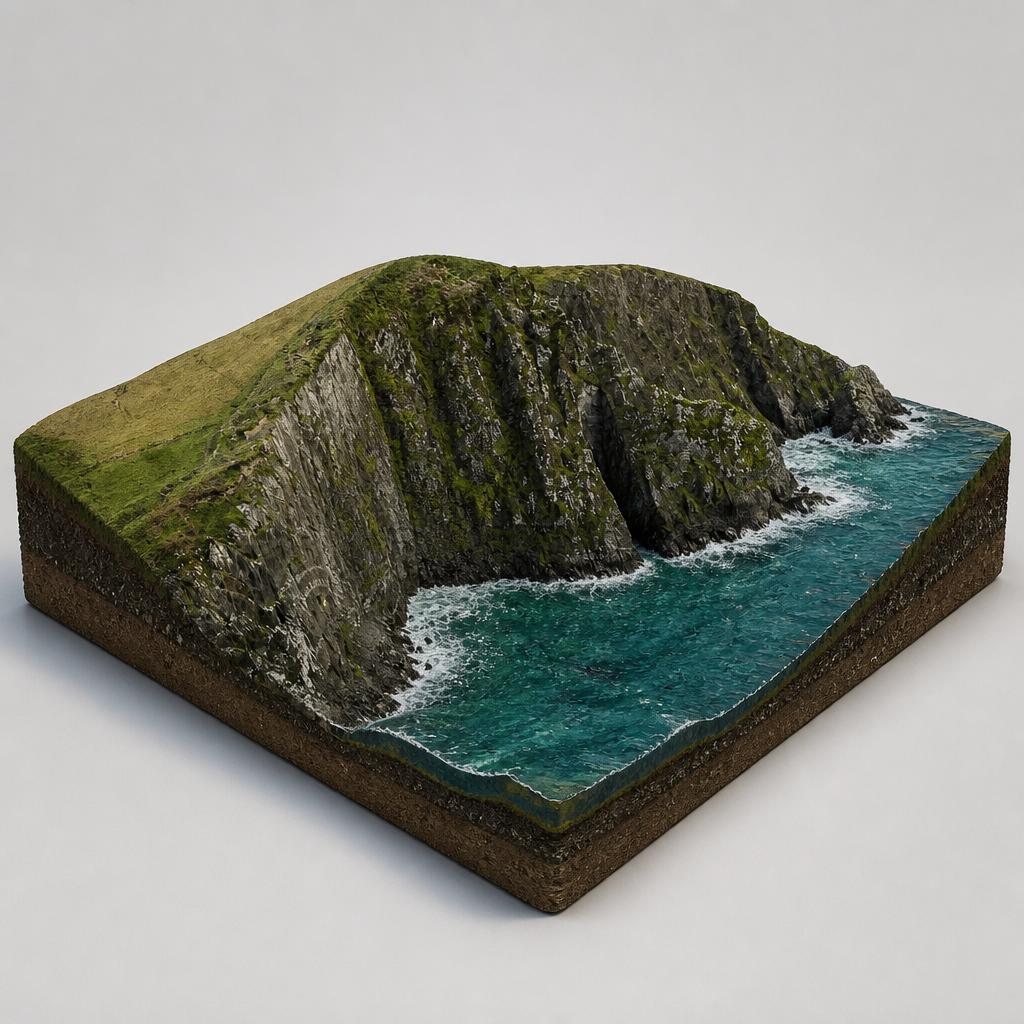
Hunt for ripple marks and tail drags
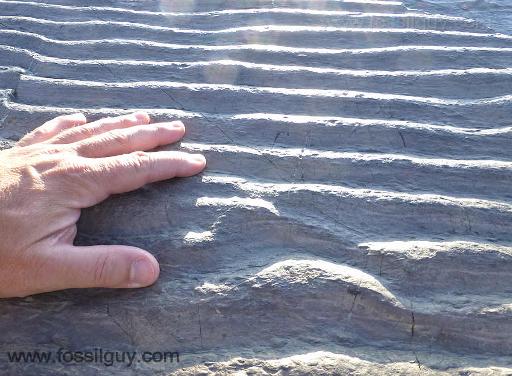
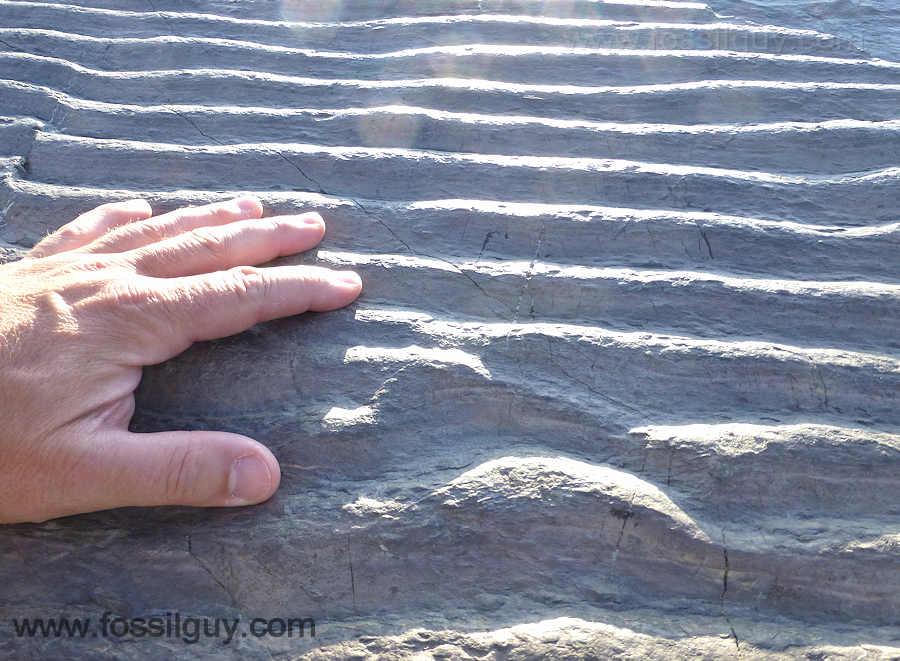
The same rock surface preserves fossilised ripple marks formed in shallow, flooded silt, and some trackways show faint tail and body drag marks left by the walking animal.
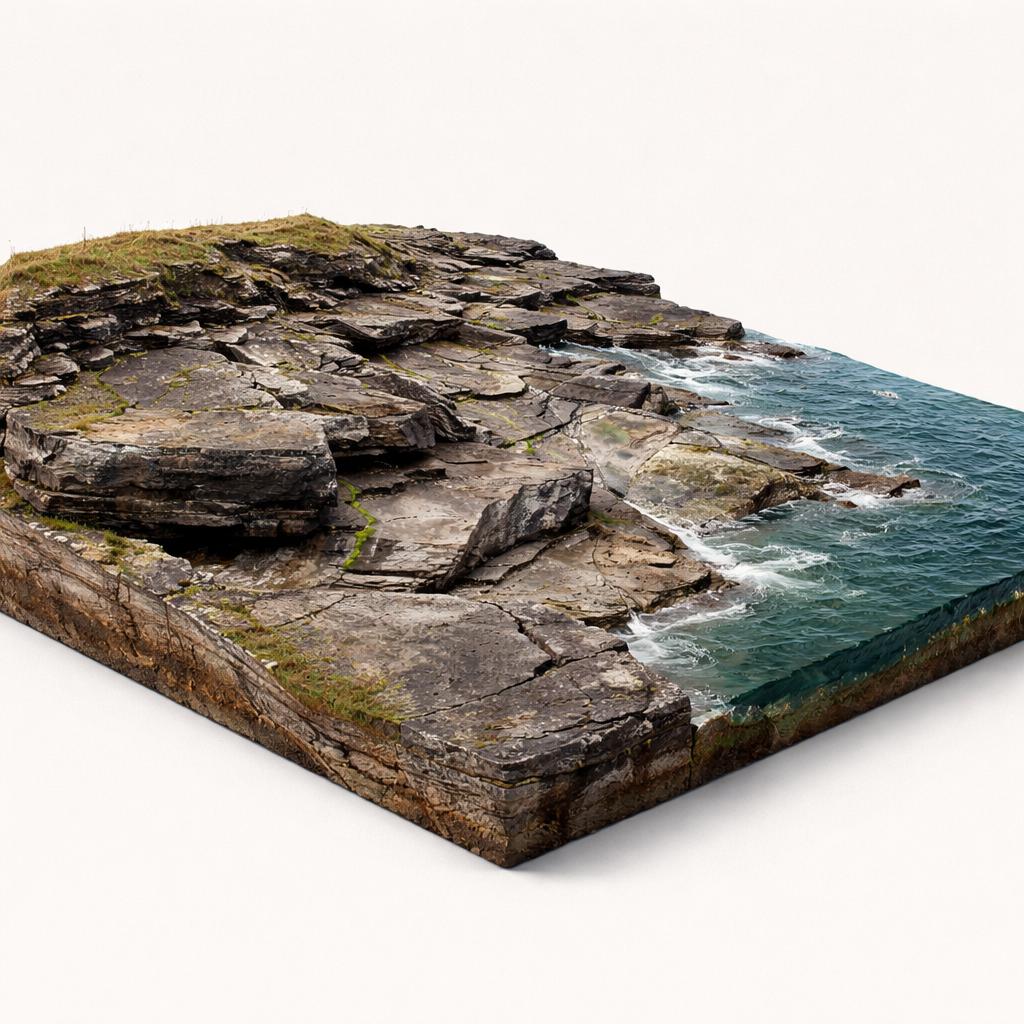
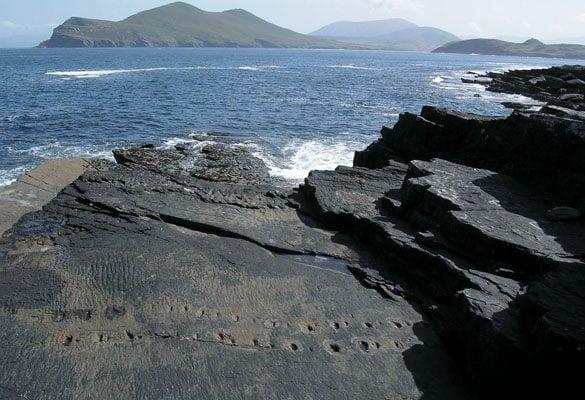
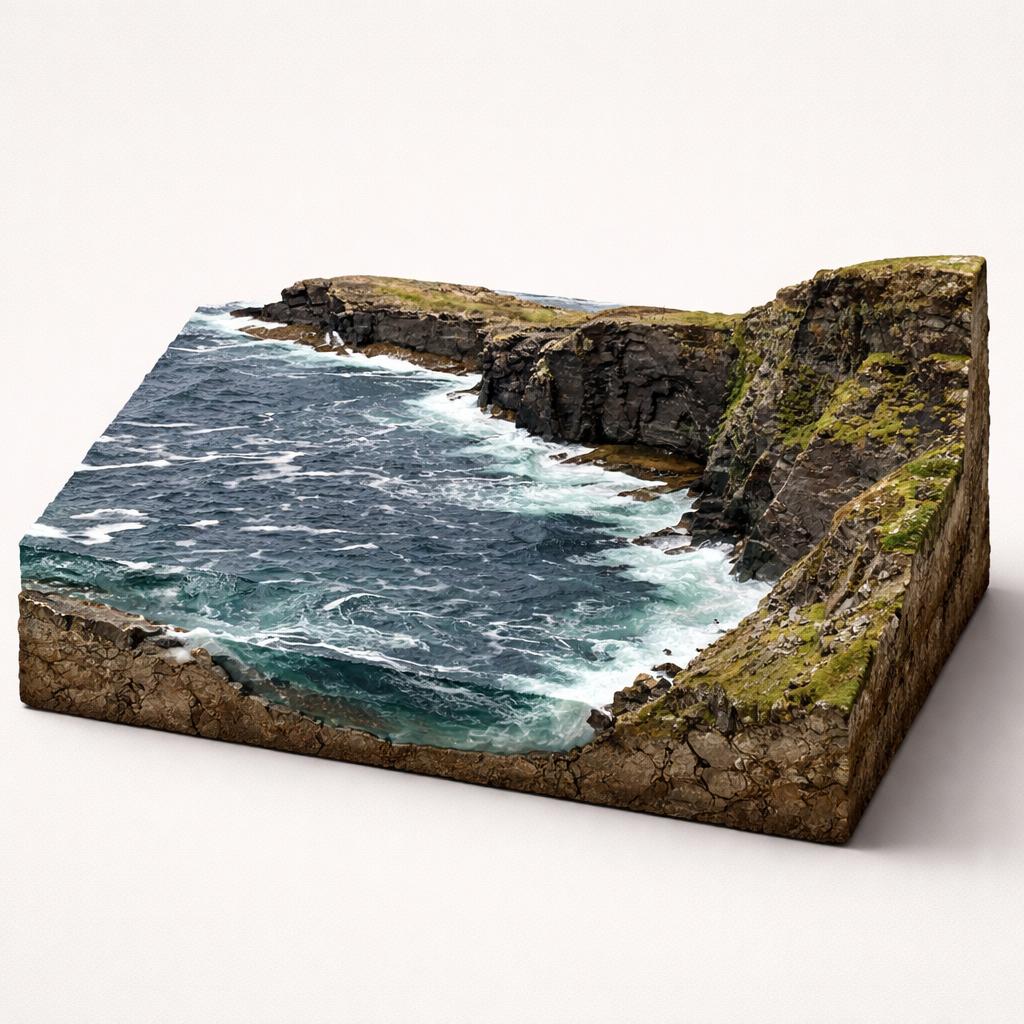
On a rocky shore at the north of Valentia Island, a 385-million-year-old trackway preserves the footprints of some of the earliest four-legged animals to walk on land — the most extensive Devonian trackway in the world.
The same rock surface preserves fossilised ripple marks formed in shallow, flooded silt, and some trackways show faint tail and body drag marks left by the walking animal.
The main draw is the trackway itself: shallow, regularly spaced depressions in the rock, forming the most extensive Devonian tetrapod trackway in the world and running up to 15 metres long. The prints are faint, so take your time and look closely.
Park at the small signed 'Tetrapod Car Park' near Chapeltown, then follow the short path down to the rocky shoreline beside Dingle Bay. It is steep and uneven, and the route is not recommended for wheelchair users or visitors with restricted mobility.
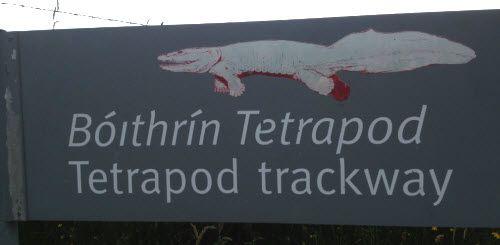
Information boards at the site explain the Devonian world, how the tracks were preserved in wet mud and what the tetrapod looked like, with English and Irish signage. The fossils lie behind ropes, so stay back to protect them.
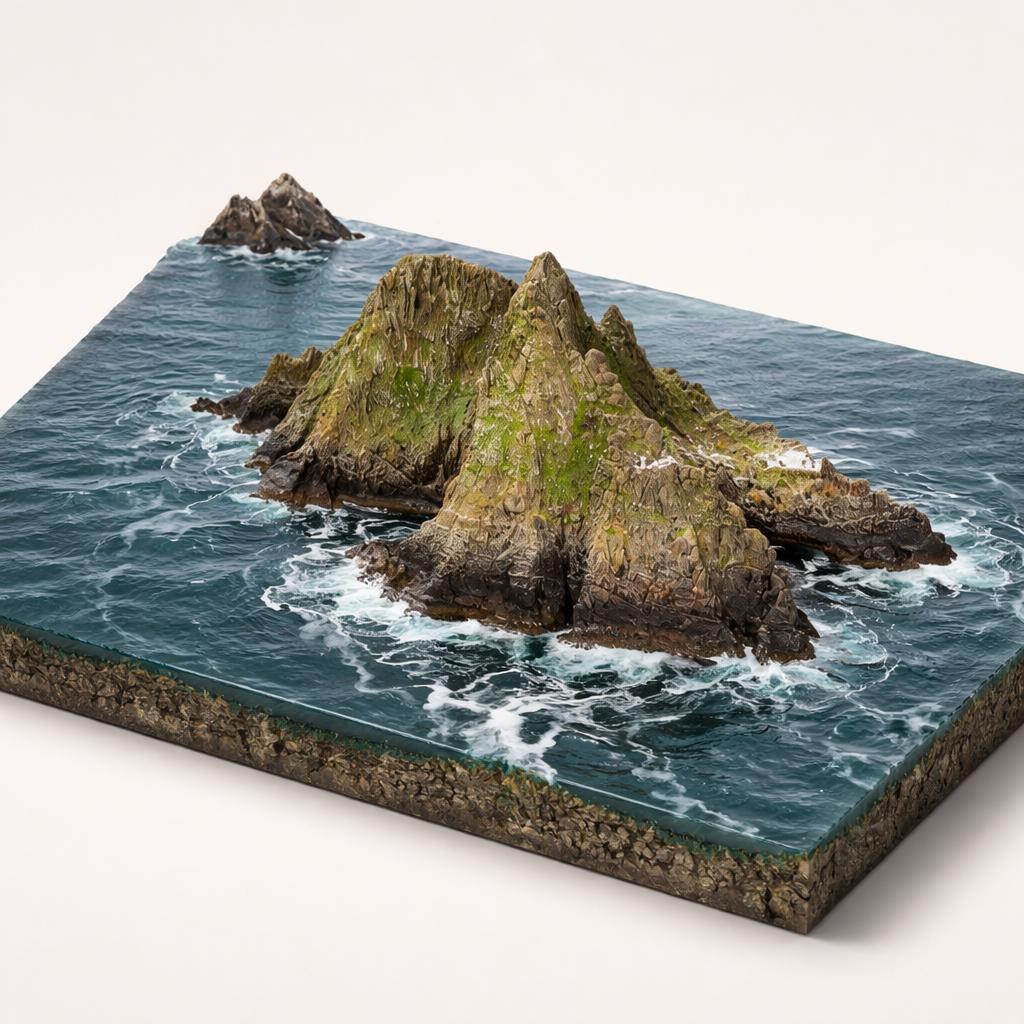
Nearby, privately owned Geokaun Mountain charges a small admission fee and has a 1.5 km summit loop with views to the Skelligs and Dingle. The lighthouse and old slate quarry are also within a short drive.
There is nothing on site, so head to Knightstown village for the family-run Watch House cafe, seafood chowder at the Royal Hotel, or a pint in a cosy pub.
Load the interactive map to explore this place location.