The Romanesque Church
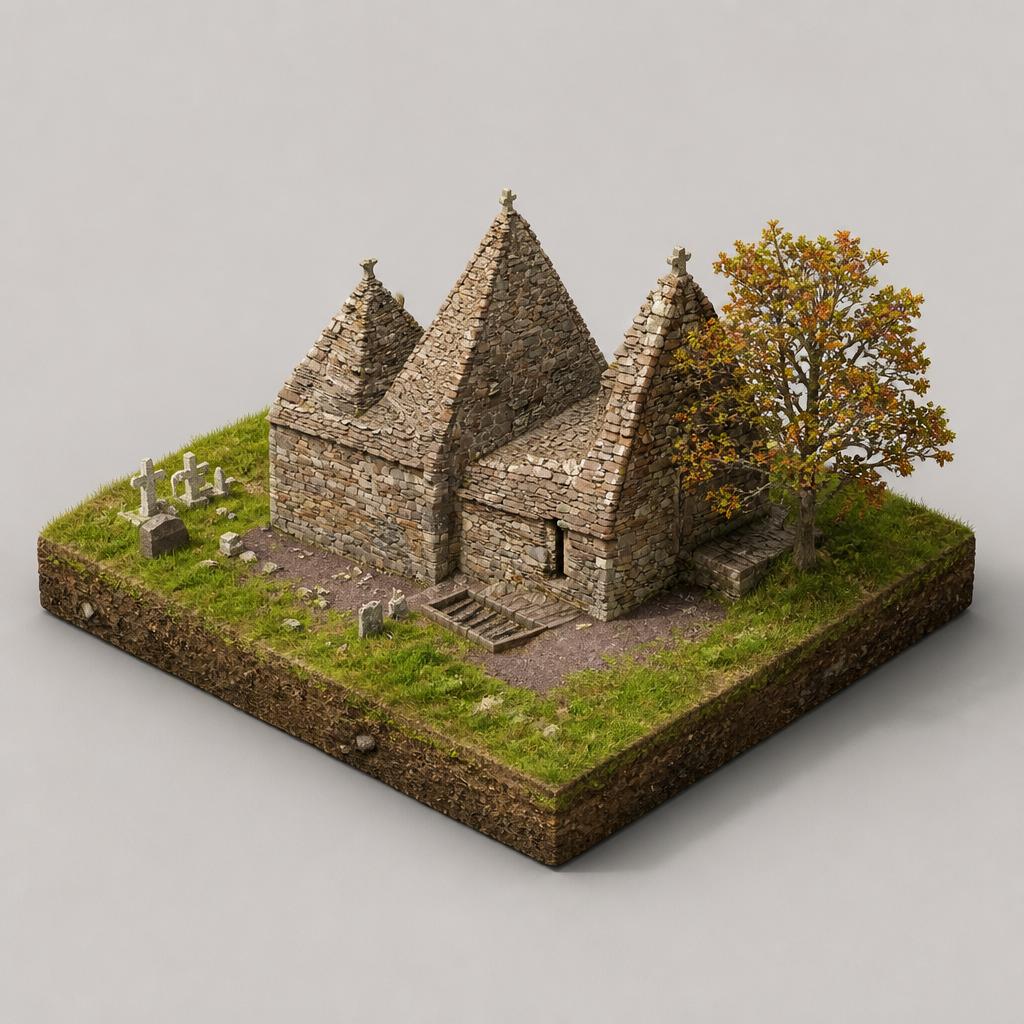
The roofless 12th-century nave and chancel are a standout of Hiberno-Romanesque building, with a three-order zig-zag west doorway, carved animal-head stops and a finely decorated chancel arch.
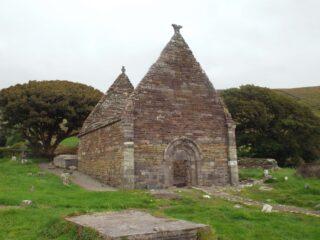

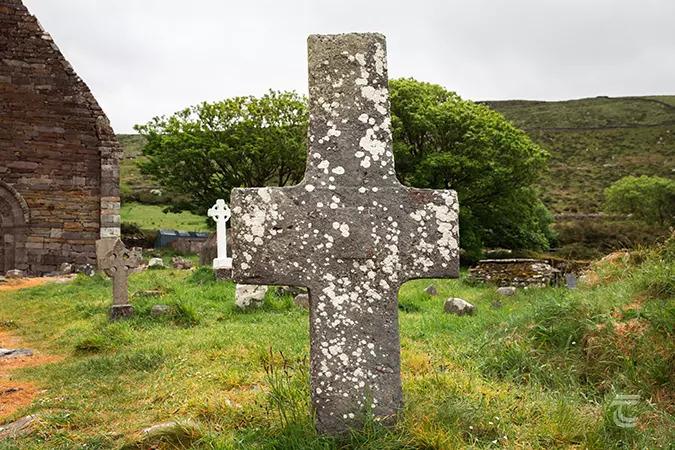
Kilmalkedar is one of Ireland's most significant early Christian and medieval church sites, a Hiberno-Romanesque complex spread over ten acres above Smerwick Harbour on the Dingle Peninsula. The roofless 12th-century church, ogham stone, sundial and holy well make it a rewarding, free stop on the Slea Head Drive.
The roofless 12th-century nave and chancel are a standout of Hiberno-Romanesque building, with a three-order zig-zag west doorway, carved animal-head stops and a finely decorated chancel arch.
A holed ogham stone near the path carries the 6th-7th century inscription ANM MAILE INBIR MACI BROCANN, and beside it stands a plain Latin cross over 2m tall whose shaft continues well below ground.
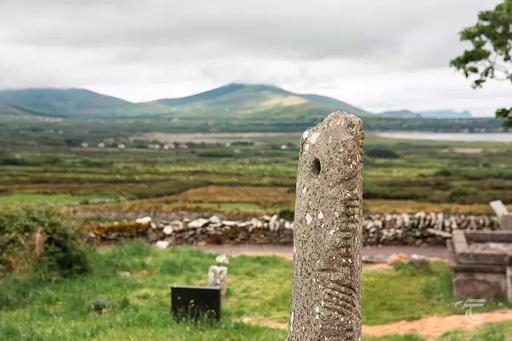
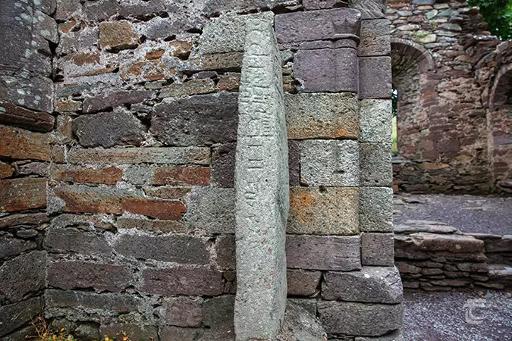
Now inside the church beside the chancel arch, this 1.2m pillar stone bears the letters DNI (a contraction of Domini, 'Lord') and a Latin cross with scrolled terminals.
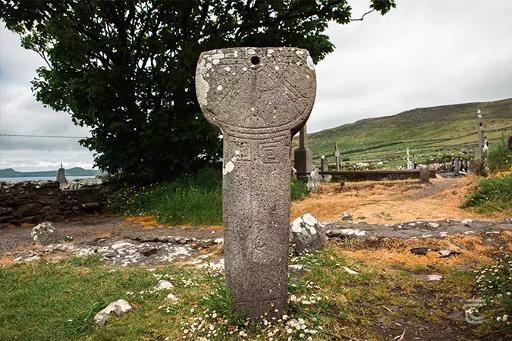
At the western end of the graveyard stands one of only nine early medieval sundials in Ireland, its semicircular head split into four sectors that once marked the passage of the day.
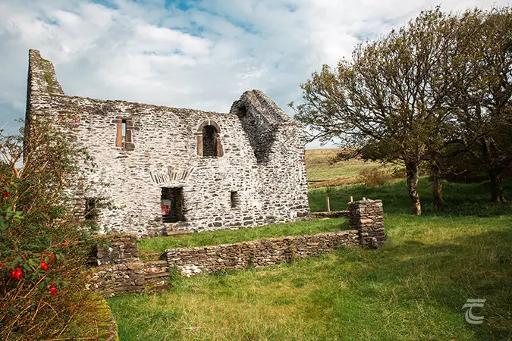
This three-storey late medieval priest's house sits in a small fuchsia-fringed enclosure beside St Brendan's Well (Tobar Breanainn). It is not currently accessible to the public and is viewed from the gate.
Still in use as a burial ground, the graveyard holds 18th- and 19th-century graves, simple upright gravemarkers and hints of earlier medieval slabs and Tau crosses.
Kilmalkedar lies on the 17.7km Cosan na Naomh pilgrim path from Ventry to the foot of Mount Brandon, a moderate linear walk past cross-inscribed stones, church ruins and beehive huts.
Load the interactive map to explore this place location.