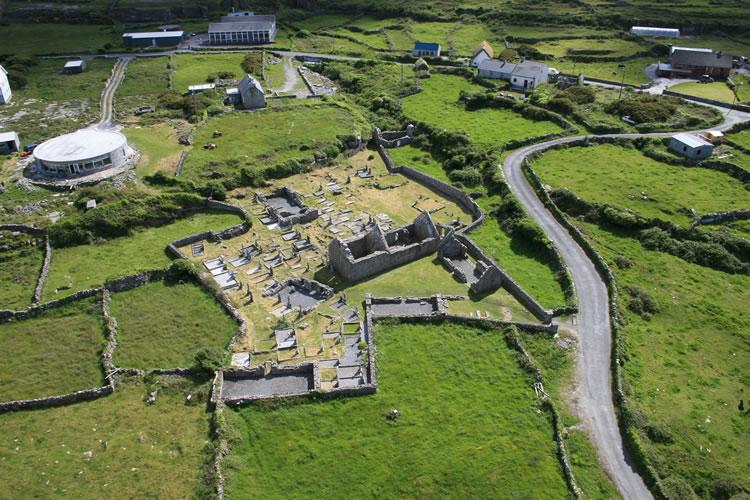
Teampall Bhreacáin (St Brecan's Church)
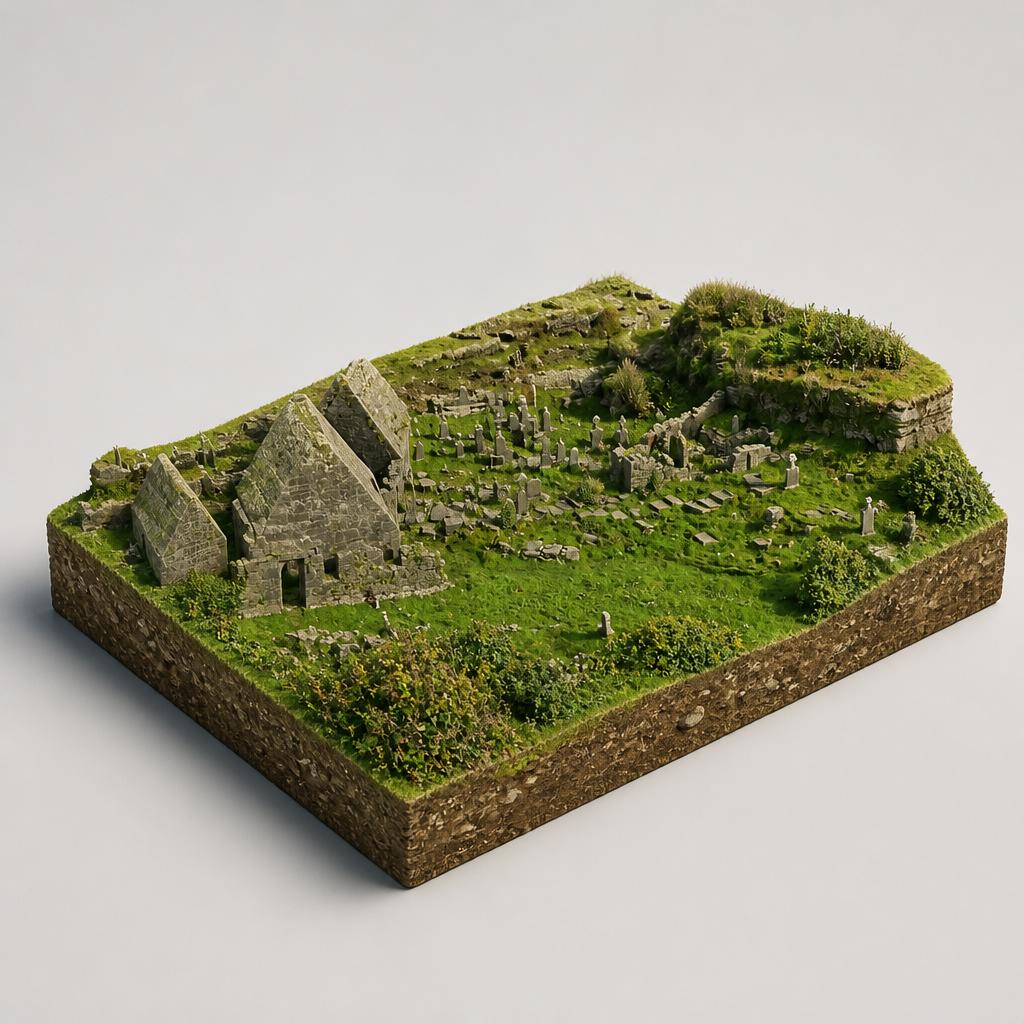
The site's largest building, built in phases from the 8th to 13th century, with massive masonry, a Romanesque doorway, nave and chancel. An inscribed west-gable stone reads 'Pray for the Two Canons'.


A 1,200-year-old monastic and pilgrimage complex on the western end of Inis Mór, where two medieval churches, carved pilgrim gravestones and Ireland's only surviving late-medieval pilgrim hostels sit beside an active cemetery. Free to wander, day or night.
The site's largest building, built in phases from the 8th to 13th century, with massive masonry, a Romanesque doorway, nave and chancel. An inscribed west-gable stone reads 'Pray for the Two Canons'.

A smaller, simpler 15th-century church linked to Saint Colmán MacDuach, possibly used as a mortuary chapel. The beehive-shaped clochán (stone hut) beside it may have served as a monk's dwelling.
Look for the 'VII Romani' gravestone (the Seven Romans), a stone inscribed 'Tomas AP' (Thomas the Apostle) and the Leaba Bhreacáin slab — tradition says lying in its carved hollow cures illness.
The rectangular stone houses flanking Teampall Bhreacáin are believed to be the only pilgrim hostels to survive from late-medieval Ireland, when this was a major west-coast pilgrimage centre.
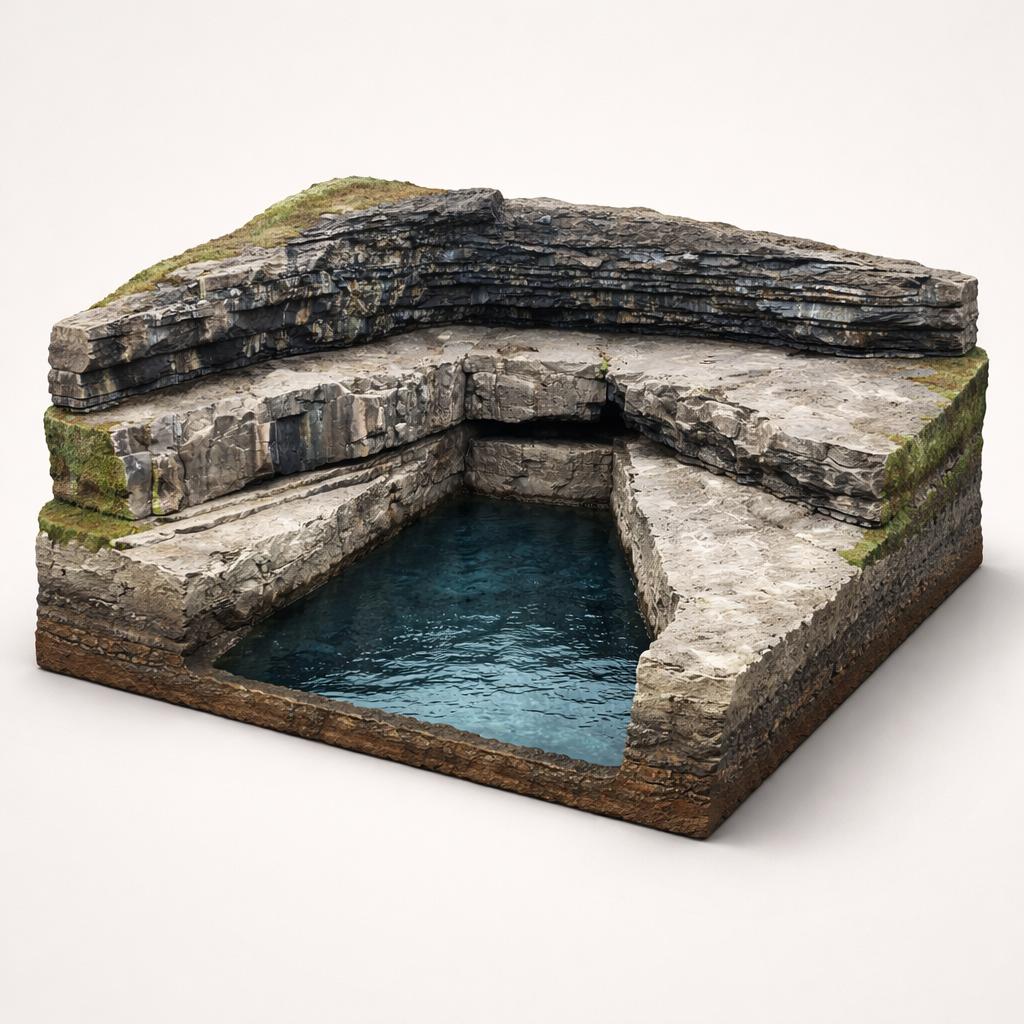
Two holy wells, Tobar an Spioraid Naoimh and Tobar Bhreacáin, are now enclosed within the site. The surrounding graveyard is still in active use, with graves marked by plain stones and carved crosses.
The site lies about 3 km from Kilronan at the end of the island road. Cycle, walk, or join a minibus tour from Kilronan that stops at the Seven Churches, Dún Aonghasa and the seal colony.
Load the interactive map to explore this place location.