Walk the cliff path
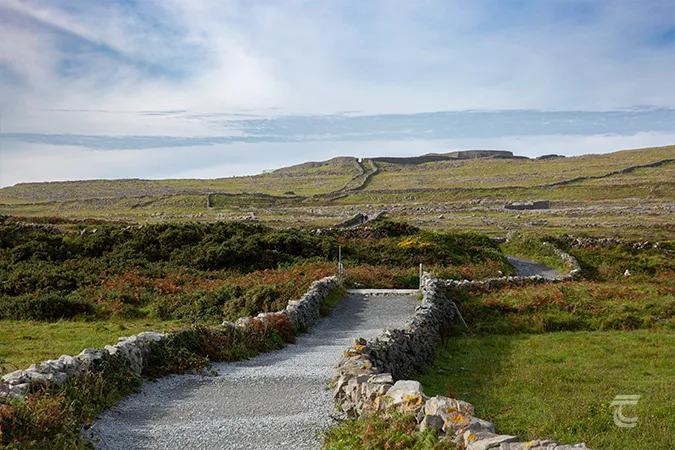
The visitor centre sits at the start of a 1km pedestrian route to the fort, over rising ground and rough natural rock. Boots or strong walking shoes are recommended, and care is needed on the descent.
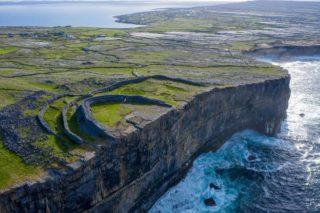
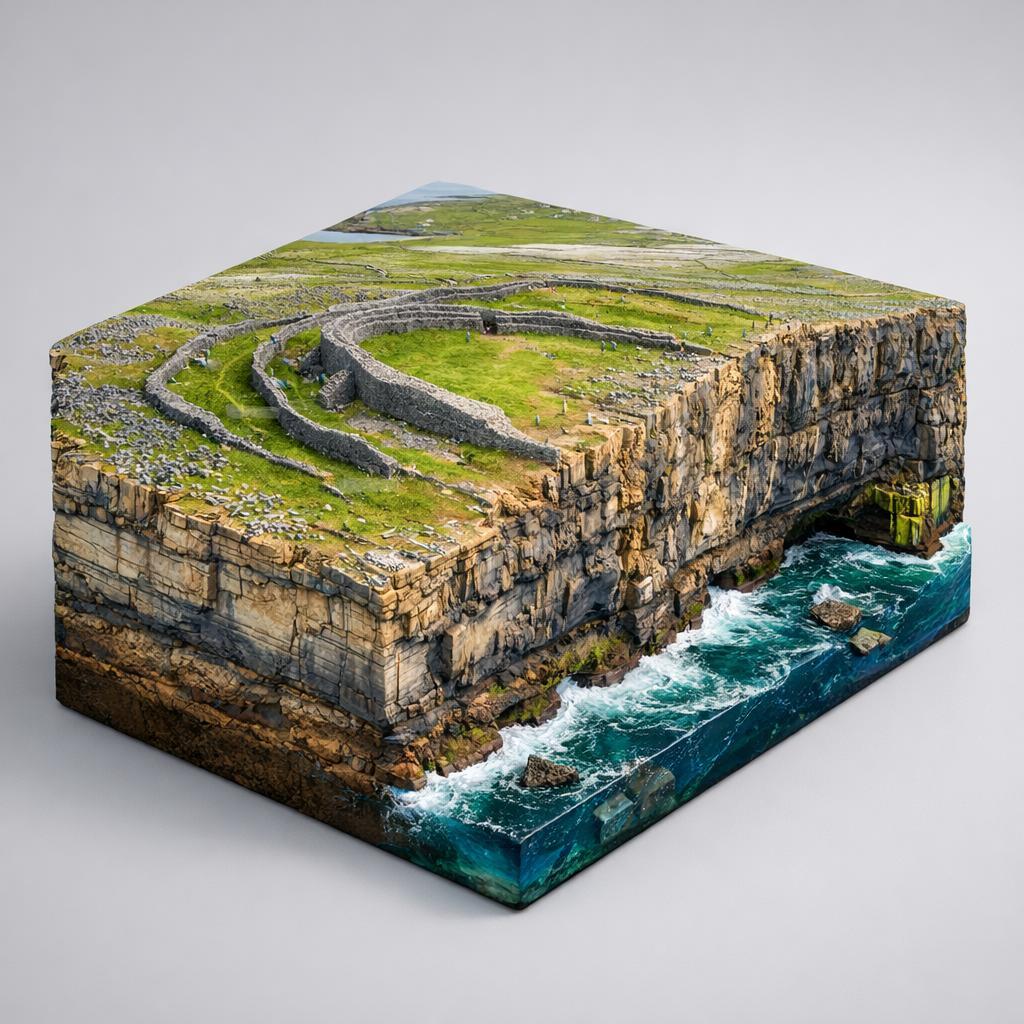
Perched on a sheer cliff above the Atlantic, Dún Aonghasa is a 3,000-year-old drystone fort and the largest of the Aran Islands' prehistoric strongholds.
The visitor centre sits at the start of a 1km pedestrian route to the fort, over rising ground and rough natural rock. Boots or strong walking shoes are recommended, and care is needed on the descent.
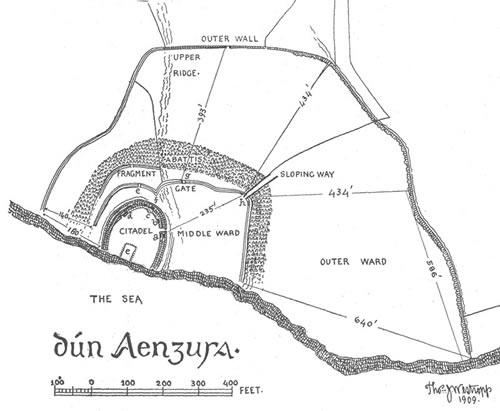
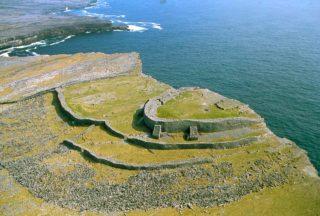
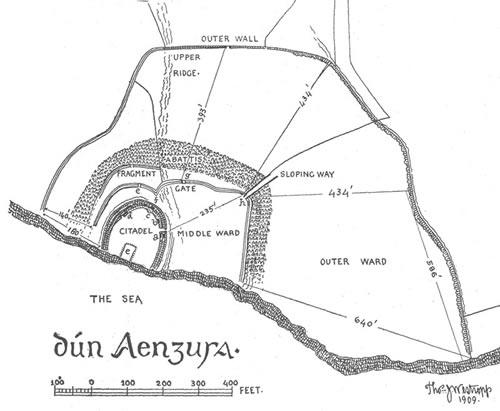
Three massive drystone defence walls divide the hillfort into outer, middle and inner enclosures. Around the middle wall runs a chevaux-de-frise, a dense band of jagged upright stones built to stop attackers.
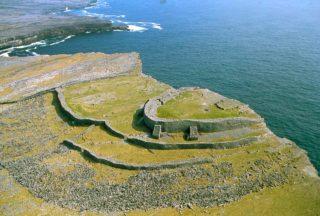
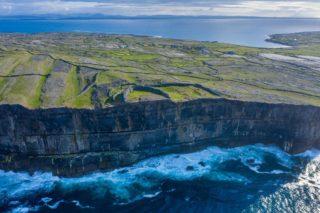
The inner enclosure ends at a rock platform on the cliff edge, 87 metres above the sea. There is no fence or barrier at the drop, and the views stretch the length of the island.
The refurbished centre at Cill Mhuirbhigh (Kilmurvey) is the gateway to the monument, with an interpretive exhibition and guided tours of the site.
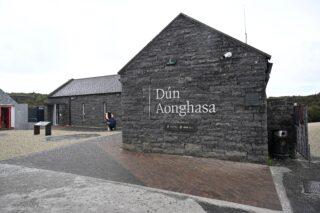
The visitor centre stands at the edge of Kilmurvey Craft Village, a handful of Celtic-inspired arts and crafts shops. Tigh Nan Phaidi, an old café in a traditional thatched cottage at the foot of the fort, is a handy stop.
The fort lies about 7km west of Cill Rónáin (Kilronan), where the ferries dock. Bicycles, private tour buses and horse-drawn carriages can be hired at the ferry port.
Load the interactive map to explore this place location.