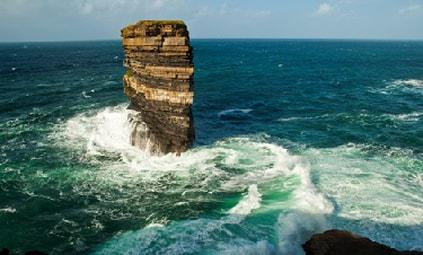
Dún Briste sea stack
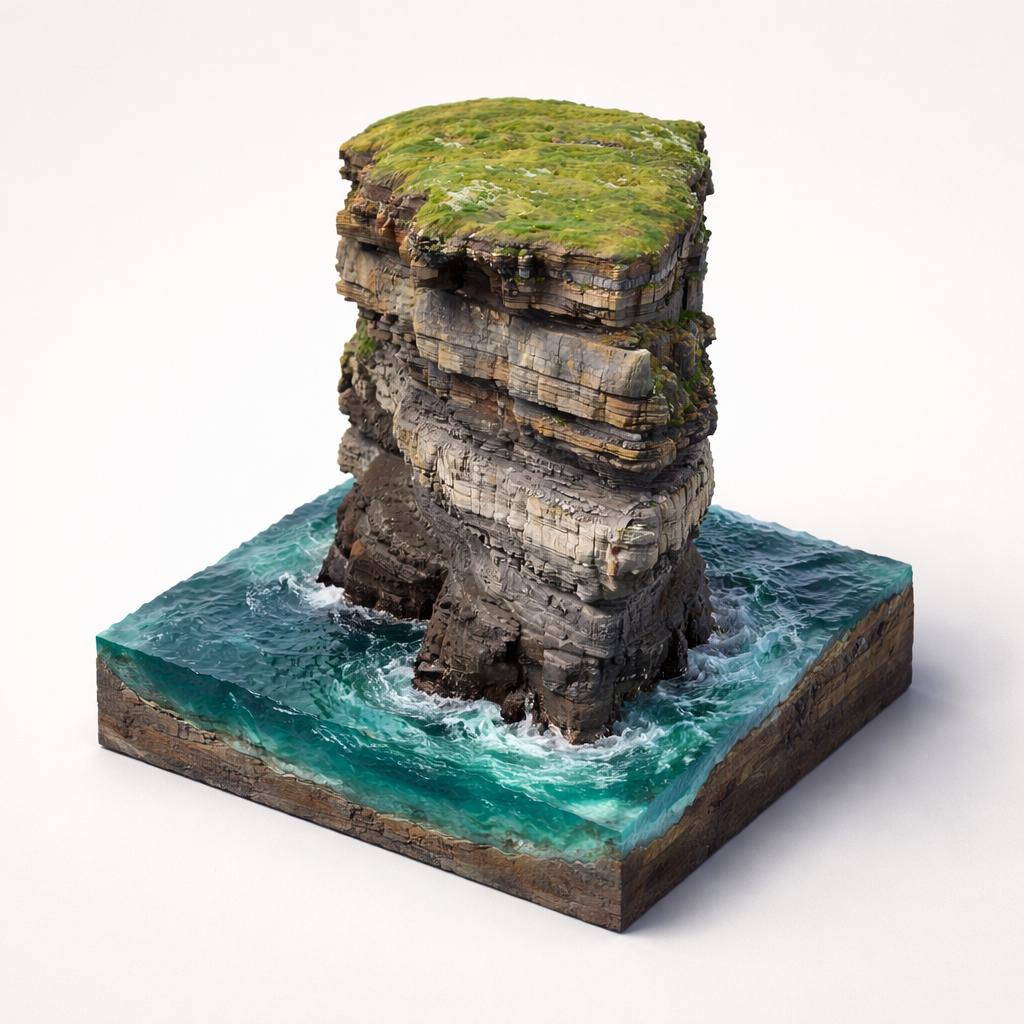
The signature sight: a 45-metre stack of 350-million-year-old layered rock that broke off the mainland in a storm in 1393, stranding the ruins of dwellings on its flat grassy top. Seabirds nest on its ledges in summer.
A windswept Mayo headland where a 45-metre sea stack, a thundering blowhole and a wartime Éire sign share one short cliff-top loop. Entry is free and the gate never closes.
The signature sight: a 45-metre stack of 350-million-year-old layered rock that broke off the mainland in a storm in 1393, stranding the ruins of dwellings on its flat grassy top. Seabirds nest on its ledges in summer.
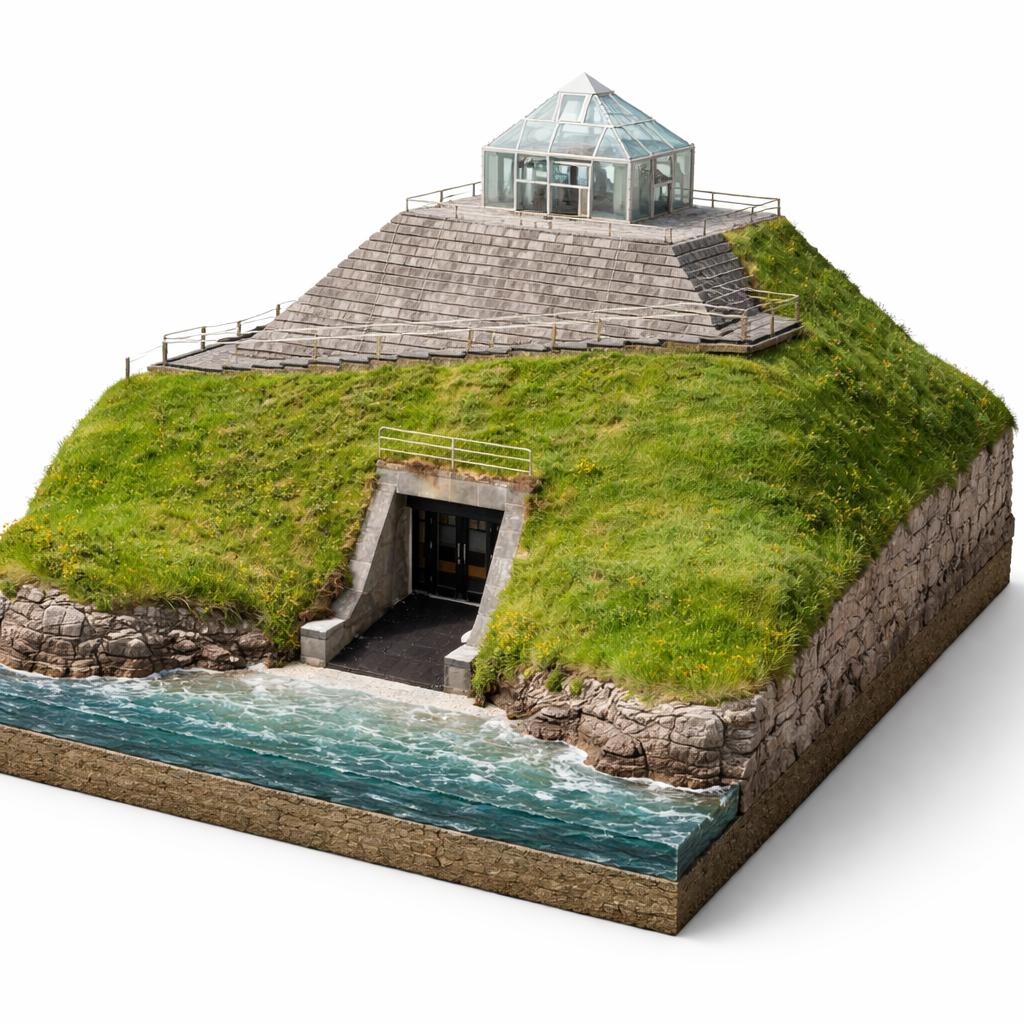
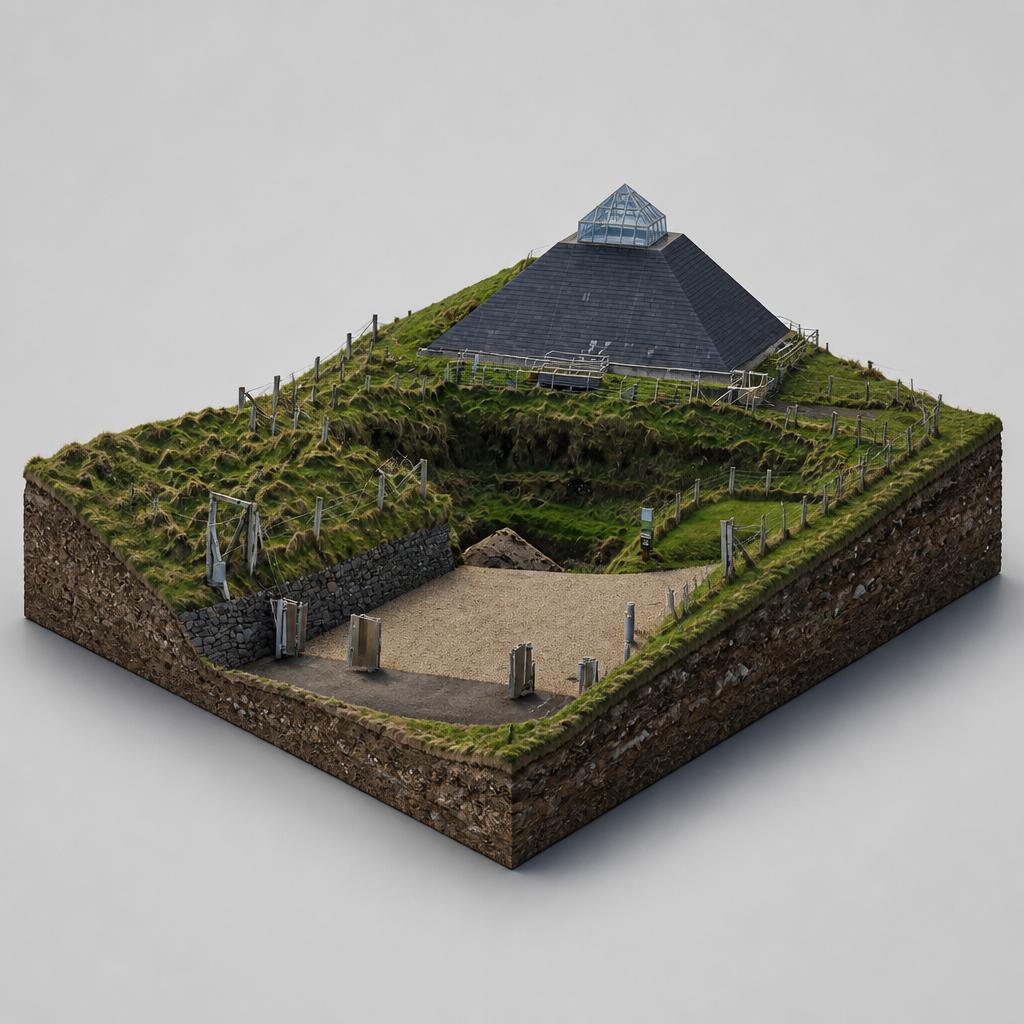
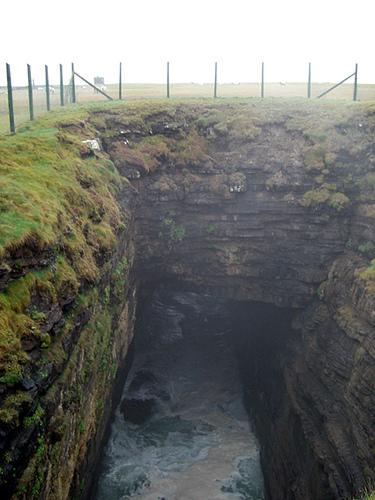
An inland blowhole where a collapsed cave still funnels the swell; in rough weather it throws foam and vapour into the air, which is how it got the name 'Hole of the Old Fire'. A fenced platform lets you look into it safely.
The ruined church marks the site St Patrick is said to have founded; inside stands a statue erected in the mid-1980s. Mass is still celebrated here on Garland Sunday, the last Sunday of July.
A restored Second World War lookout hut beside the white-stone 'ÉIRE 64' ground marker, laid so aircraft crossing the Atlantic knew they had reached neutral Ireland.
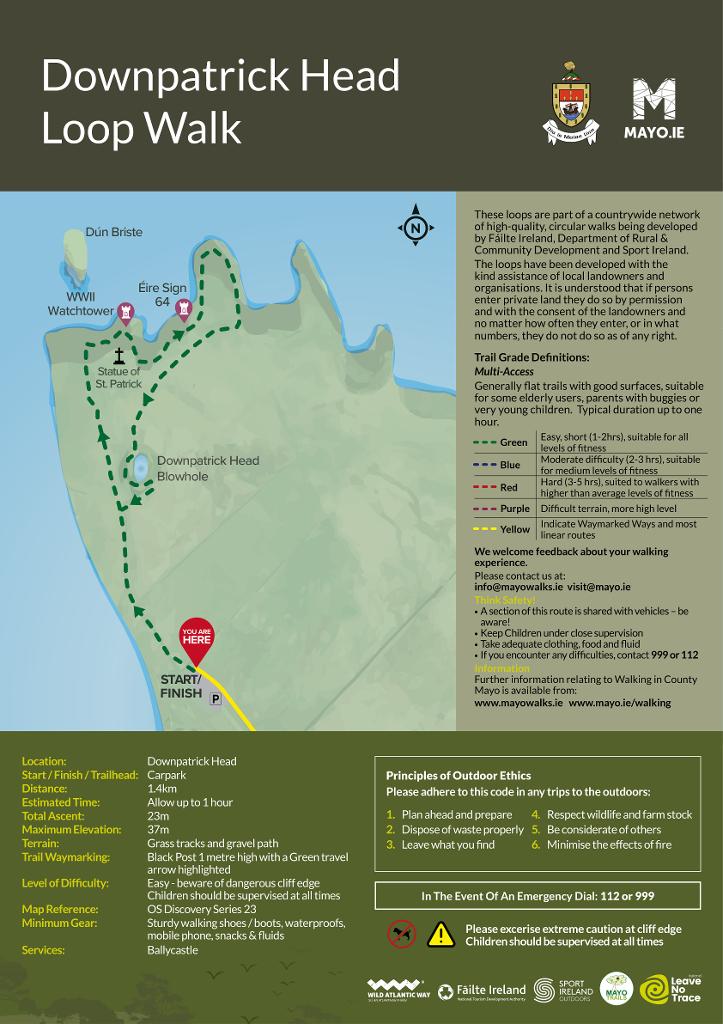
A 1.4 km waymarked loop from the car park, graded easy: allow up to an hour over grass tracks and gravel with 23 m of ascent, taking in the blowhole, church, watchtower and cliff-top views. The cliff edge is unfenced throughout, so keep back and supervise children.
A €2 audio guide streams straight to your phone in English or Spanish and runs over ten minutes, covering St Patrick, the wartime post and how Dún Briste was formed. Listen at each stop or before you arrive.
Load the interactive map to explore this place location.