Walk the ruined interior
Step through the west entrance below the tower into the roofless nave, where traces of old plasterwork survive underfoot and James Russell rests in a vault beneath the floor.
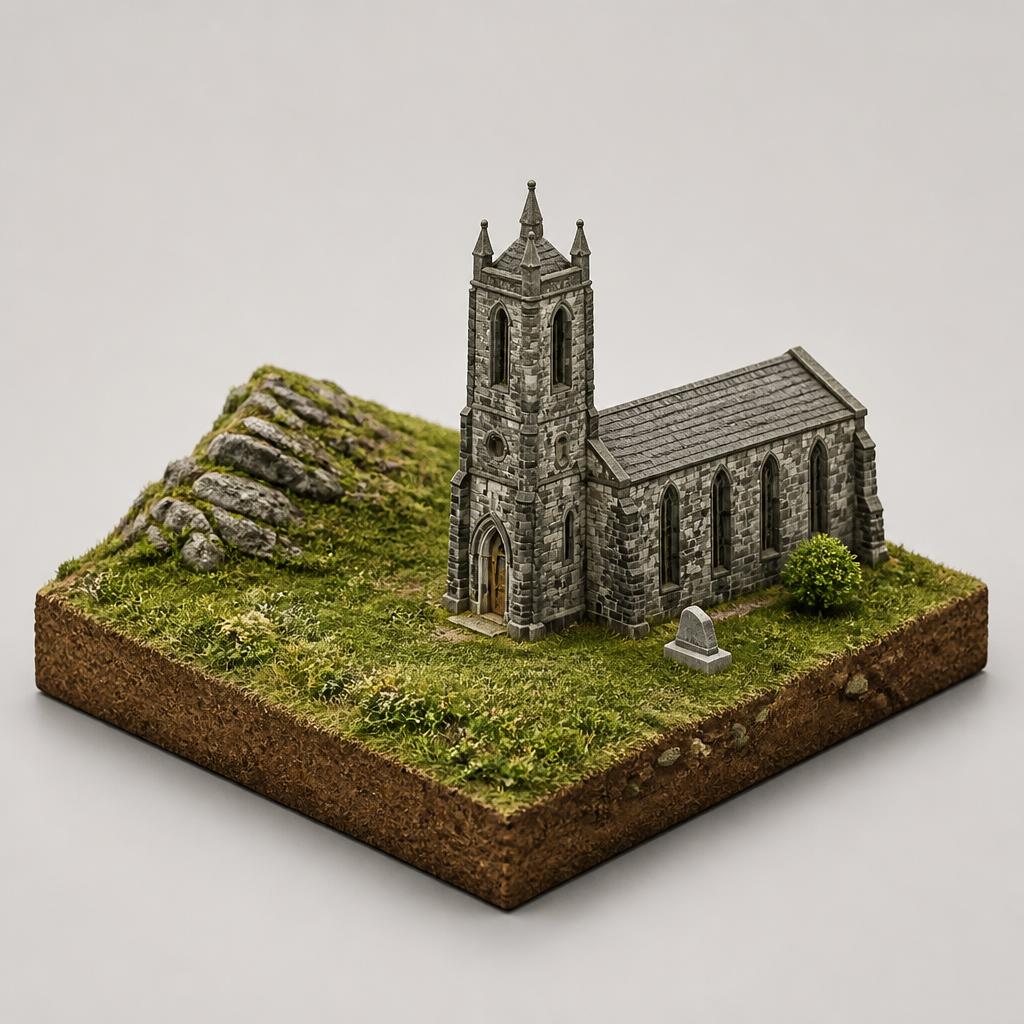
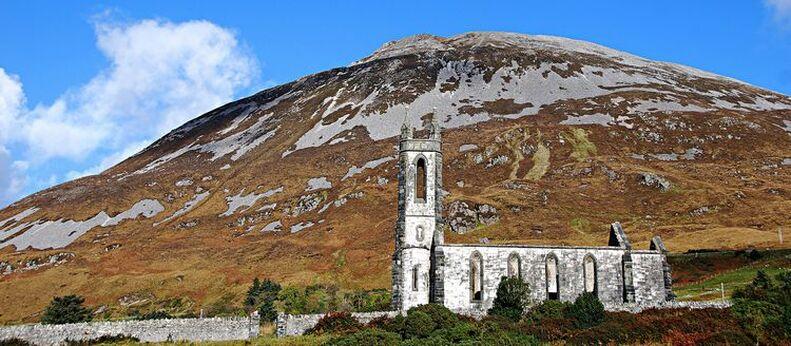
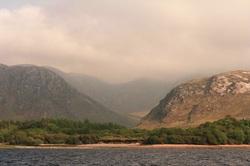
A roofless 19th-century church stands alone at the head of Dunlewey Lough, framed by Errigal mountain and the brooding Poisoned Glen. Built as a widow's memorial, it is free to wander and open to the sky.
Step through the west entrance below the tower into the roofless nave, where traces of old plasterwork survive underfoot and James Russell rests in a vault beneath the floor.
The tall east window frames the glen, while a gated stair once climbed to the bell — since removed and installed in the Church of Ireland at Cashel near Doe.
Set at the top of the lough, the churchyard gives a commanding view down the water with Errigal rising behind — the classic photograph of Dunlewey.
Jane Russell began the church after her husband James died in 1848, and it was consecrated in 1853; its marble walls and touching history earned it the name the Donegal Taj Mahal.
A long, narrow boreen leads past the gate into the glen, named for the legendary eye of Balor — or, more likely, a mistranslation of 'heavenly glen'.
Golden hour is magic here, and the site is a favourite for landscape and architectural shots. Expect strong winds in the glen — secure hats and watch your footing.
Load the interactive map to explore this place location.