Walk the cloister
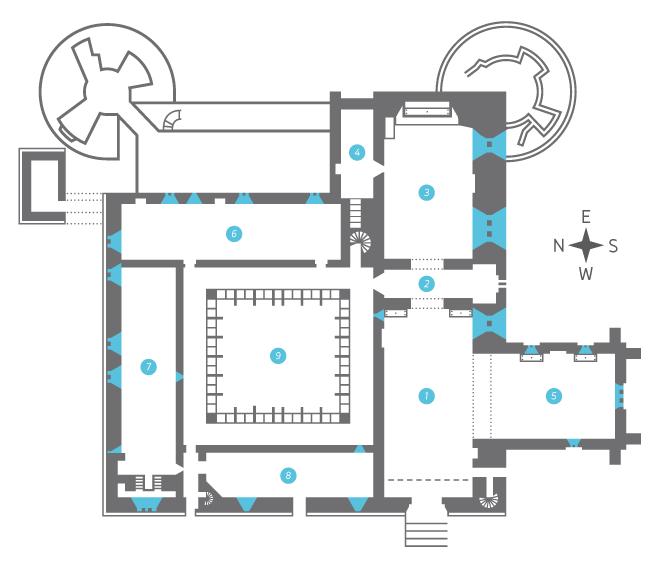
The small, intimate cloister is one of the best surviving examples of a mendicant cloister in the country, its covered walks set around an open garth that links the church to the domestic rooms.
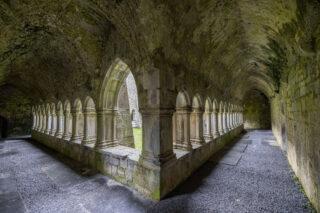
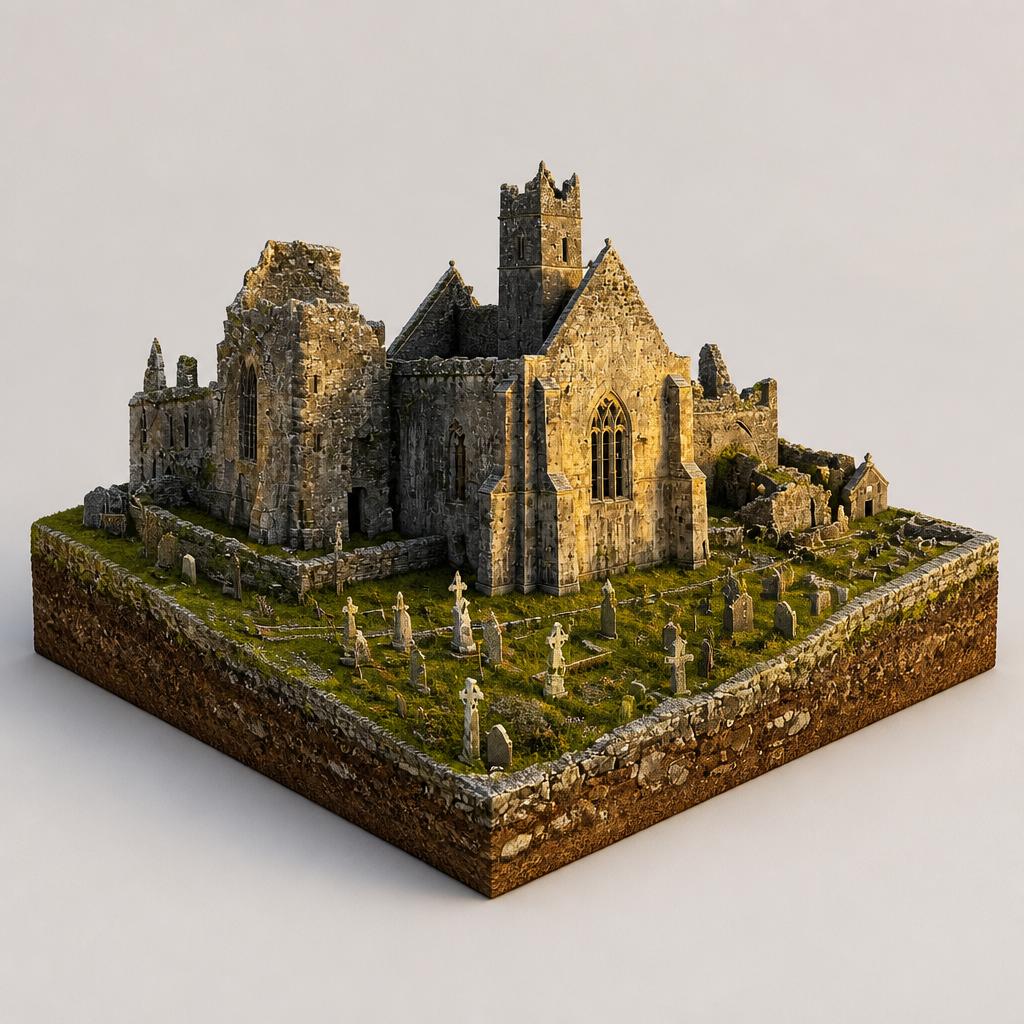
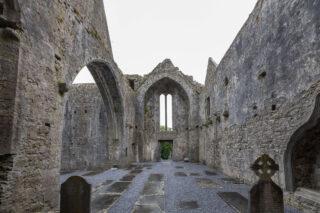
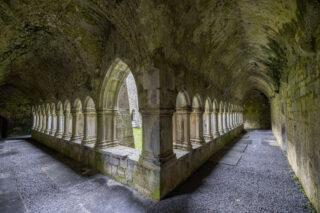
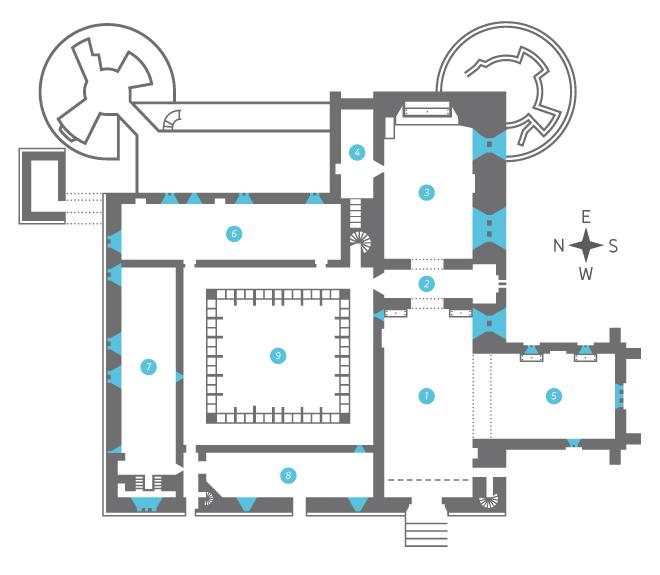
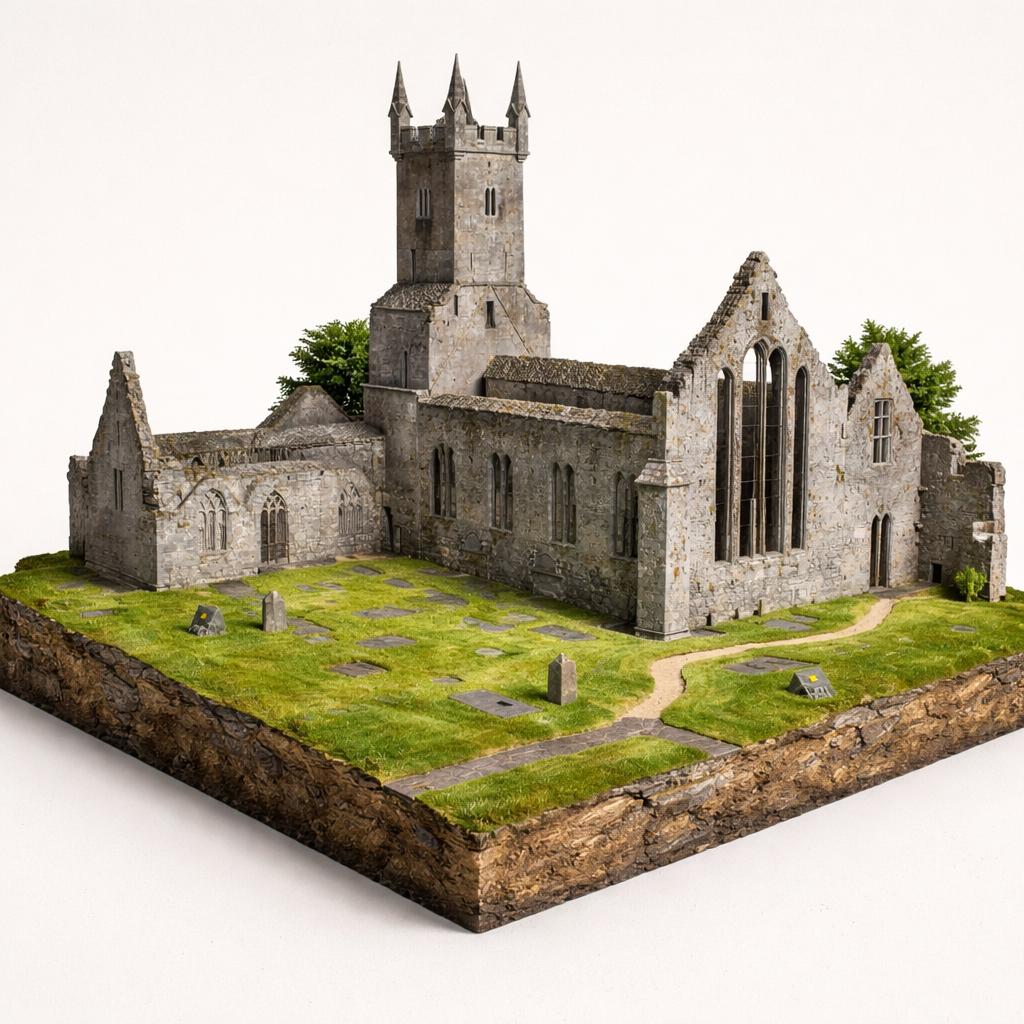
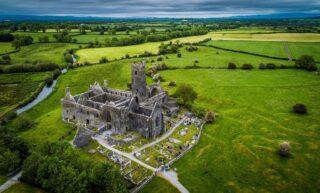
Quin Friary is a remarkably intact 15th-century Franciscan friary built inside the ruins of an Anglo-Norman castle, and its small cloister is among the best preserved in the country.
The small, intimate cloister is one of the best surviving examples of a mendicant cloister in the country, its covered walks set around an open garth that links the church to the domestic rooms.
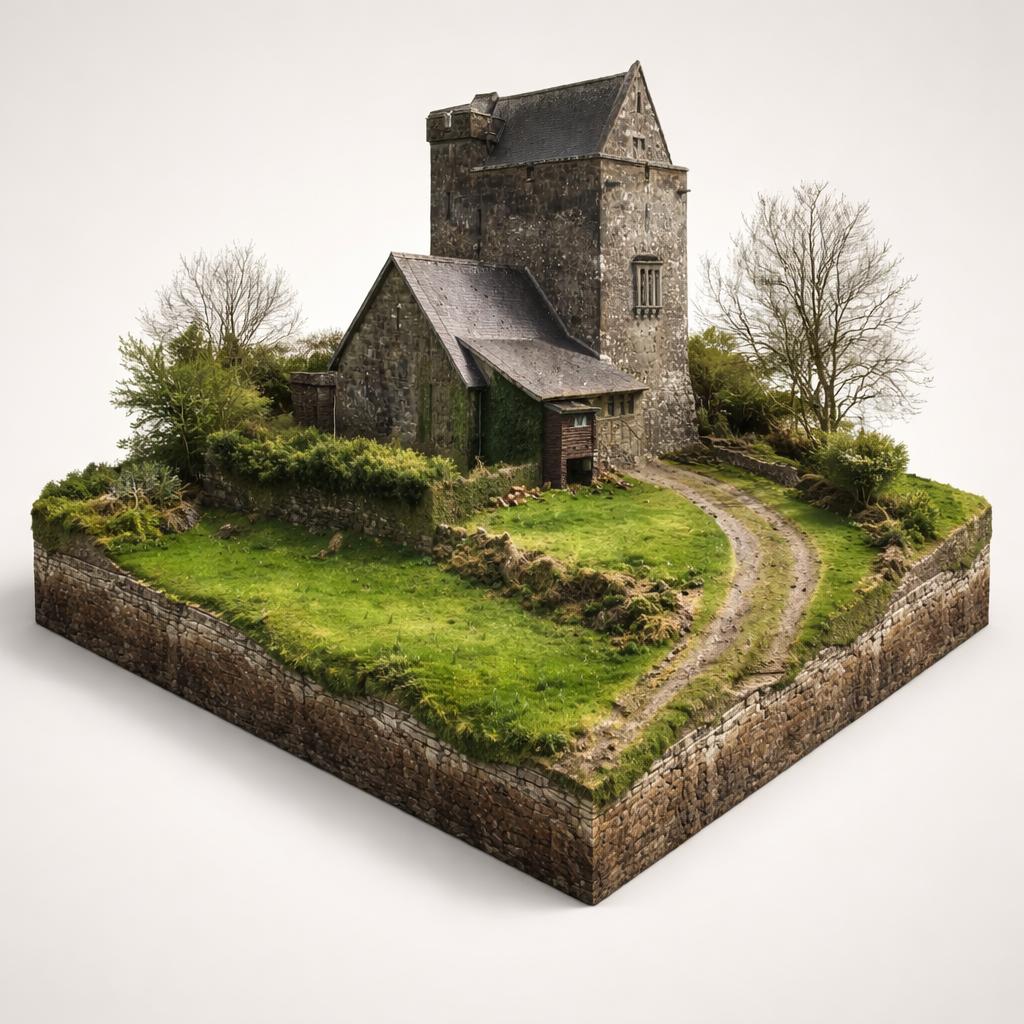
The friary was built within the ruins of Thomas de Clare's 13th-century castle, and the foundations of three corner towers of its curtain wall still survive around the site.
The medieval stone high altar survives in its original position at the east end of the church, and beside it are the rare remains of an early 17th-century stucco crucifixion above a tomb.
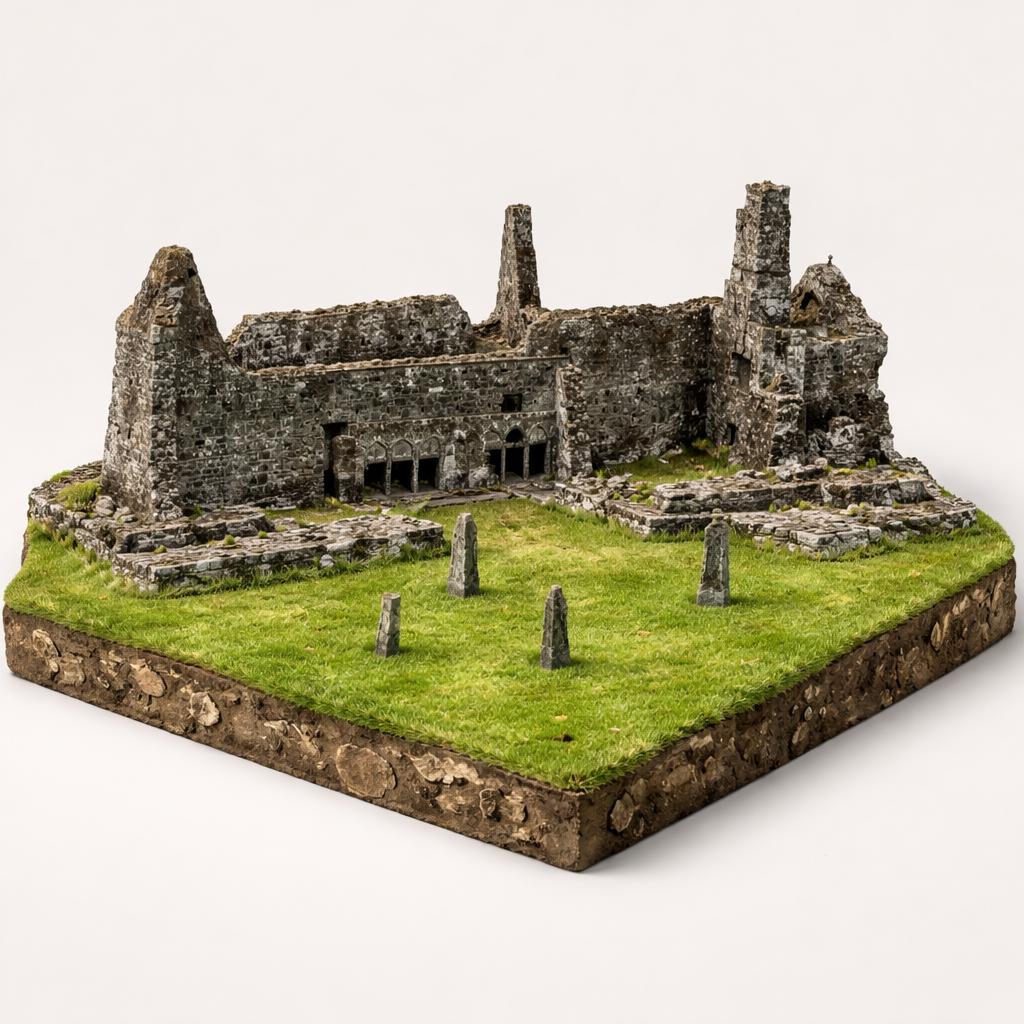
The refectory still has its original flagged floor, stone table bases and a reader's desk, and the sacristy, kitchen, dormitory and garderobe survive enough to read the friars' daily life.
Quin is a fine example of a medieval settlement: aside from the friary there is a deserted village, now marked by grassy mounds, and across the River Rine a large 13th-century parish church dedicated to St Finghin.
Load the interactive map to explore this place location.